Why Choose Potassium Nitrate Granules for Your Farming Needs?
In today's agricultural landscape, selecting the right fertilizers is crucial for successful farming. **Potassium Nitrate Granule** stands out as a preferred choice amongst farmers. It combines essential nutrients that promote plant growth, enhancing yield and quality. This granule offers immediate availability of potassium and nitrogen for crops, making it effective and efficient.
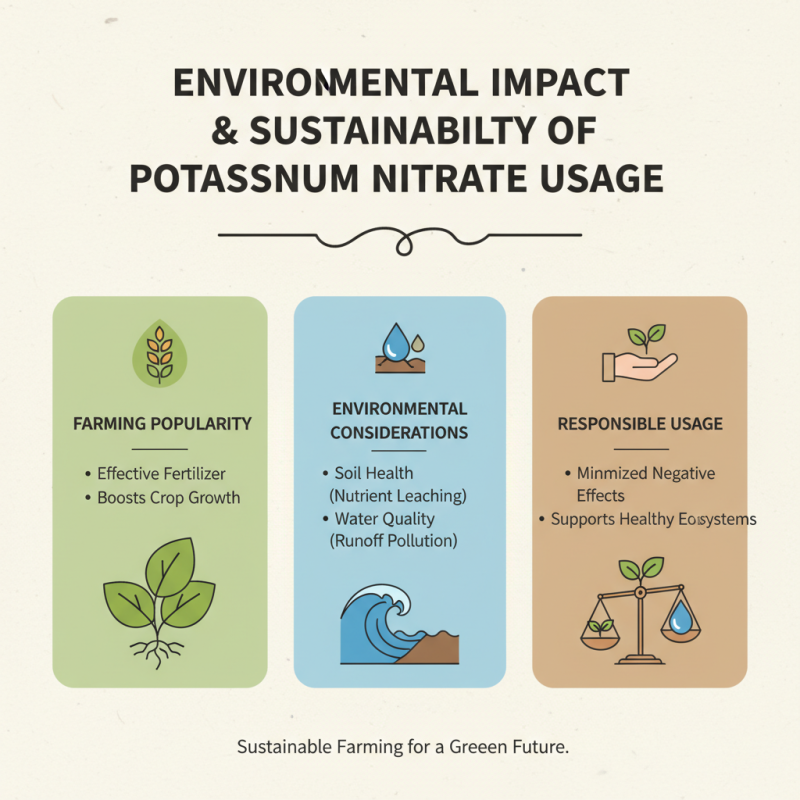
Farmers often appreciate its versatility. This product can be used in various soil types and is suitable for diverse crops. However, the knowledge of proper application is vital. Overuse can lead to nutrient leaching and environmental concerns. Maintaining balance is key. Proper consultation with agronomy experts can ensure optimal application rates.
Investing in **Potassium Nitrate Granule** is not without challenges. Each farm has unique soil conditions and crop demands. Hence, understanding individual needs is essential for maximizing benefits. By carefully considering these factors, farmers can leverage the advantages of this powerful fertilizer while minimizing potential drawbacks.
Benefits of Using Potassium Nitrate Granules in Agriculture
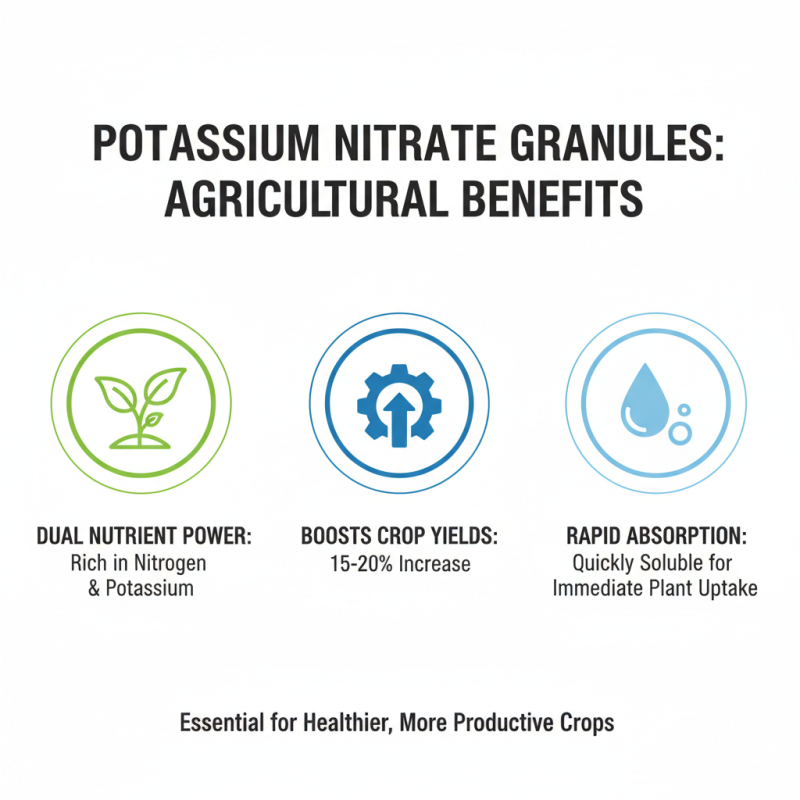
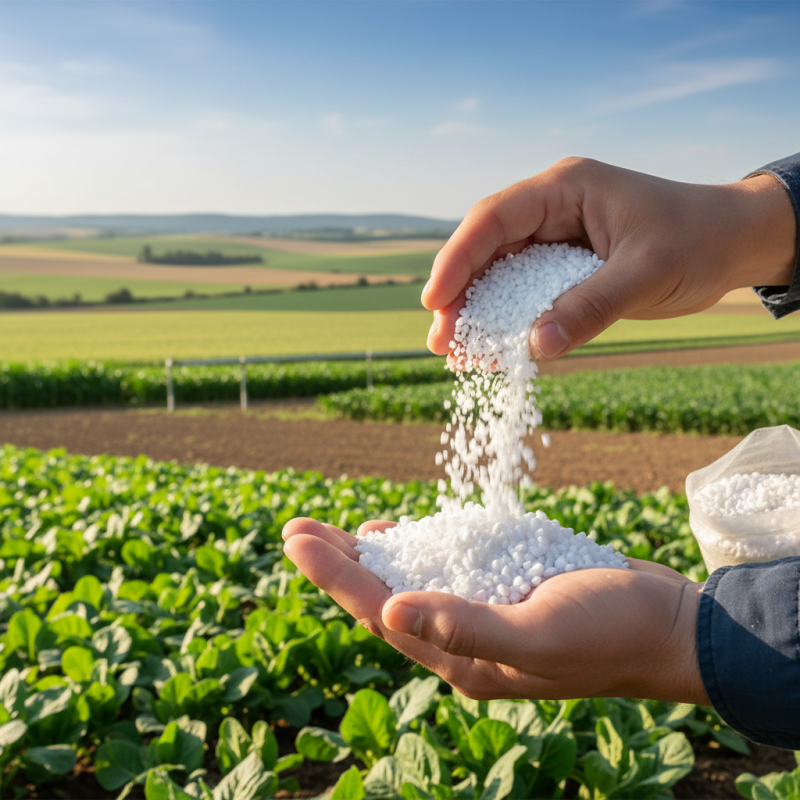
Potassium nitrate granules are increasingly popular in agriculture due to their numerous advantages. This compound is rich in nitrogen and potassium, essential nutrients for plant growth. Studies show that potassium nitrate can boost crop yields by 15-20% under optimal conditions. These granules dissolve quickly in water, providing immediate nutrient availability to plants.
Farmers appreciate potassium nitrate for its efficiency. It reduces leaching losses compared to other nitrogen sources. A recent report indicated that using potassium nitrate could decrease nutrient runoff by up to 30%. This not only benefits the environment but also enhances soil health in the long term.
While potassium nitrate is effective, it requires careful management. Over-application can lead to salt build-up in the soil. This can negatively impact crop health. Additionally, farmers must consider the specific needs of their plants. Soil testing and accurate application rates are crucial for optimal results. With proper use, potassium nitrate granules can be a powerful tool in modern agriculture.
Understanding the Nutrient Composition of Potassium Nitrate
Potassium nitrate is a highly valued fertilizer in agriculture. It contains two essential nutrients: potassium and nitrogen. Potassium supports plant strength and improves fruit quality. Nitrogen promotes lush, green growth. This combination makes potassium nitrate a popular choice for various crops.
The nutrient composition of potassium nitrate is unique. It offers a quick release of nutrients to plants. Farmers often see rapid results, which can be crucial during critical growth stages. Additionally, it dissolves easily in water. This property allows for efficient application methods, making it ideal for both foliar and soil use.
Farmers must consider their specific needs. Not all crops require the same nutrient ratios. Over-reliance on potassium nitrate may lead to nutrient imbalances in the soil. Continuous use without soil testing could harm overall crop health. A balanced approach is essential for sustainable farming practices.
Why Choose Potassium Nitrate Granules for Your Farming Needs?
| Nutrient |
Percentage (%) |
Function in Plants |
| Nitrogen (N) |
13.7 |
Promotes leafy growth and green color. |
| Potassium (K) |
46.6 |
Enhances fruit quality, disease resistance, and overall plant health. |
| Calcium (Ca) |
<1.0 |
Important for cell wall stability and growth. |
| Magnesium (Mg) |
<1.0 |
Essential for photosynthesis and enzyme function. |
Application Methods for Potassium Nitrate Granules in Crop Cultivation
Potassium nitrate granules are a popular choice for crop cultivation. They offer a balanced supply of nitrogen and potassium, two essential nutrients for plant growth. These nutrients play a significant role in promoting root development and enhancing overall crop quality. According to the International Fertilizer Association, potassium can increase crop yields by up to 25% under optimal conditions.
Application methods for potassium nitrate granules can vary depending on the crop type. Broadcasting is a common method, where granules are spread evenly across the field. This technique ensures that the nutrients are accessible to the plants while minimizing waste. Incorporating the granules into the soil can further enhance nutrient uptake. For row crops, side-dressing applications during critical growth stages can improve performance and yield.
Tips: Use a calibrated spreader for uniform distribution. Monitor soil moisture to enhance nutrient absorption. Also, be aware of the specific needs of different crops to optimize fertilizer use.
While potassium nitrate granules offer many benefits, over-application can lead to nutrient runoff, which can cause environmental issues. Farmers should test their soil regularly to ensure proper nutrient levels. Adjusting application rates based on testing results can lead to better crop performance and sustainability.
Comparing Potassium Nitrate with Other Fertilizers
When comparing potassium nitrate with other fertilizers, several factors come into play. Potassium nitrate is known for its high solubility. This means plants can quickly absorb the nutrients. Studies show that potassium nitrate can lead to an increase of up to 30% in crop yields compared to traditional fertilizers. This is crucial for farmers aiming for efficiency and productivity.
Other fertilizers, like urea, can be beneficial but have their drawbacks. Urea releases ammonia, which can lead to nitrogen loss. This results in less available nitrogen for plants. Additionally, some potassium fertilizers might not provide the same level of nitrogen benefits. Reports indicate that potassium nitrate not only boosts plant growth but also enhances fruit quality and flavor.
However, potassium nitrate is not without concerns. It has a higher cost, which some farmers might question. The rate of application is also critical. Overuse can lead to nutrient imbalances in the soil. Farmers must consider their specific crop needs and soil conditions before making a decision. Balancing cost and benefits is key in achieving optimal results.
Why Choose Potassium Nitrate Granules for Your Farming Needs?
This chart compares the nutrient content percentages of various fertilizers, highlighting the advantages of using potassium nitrate granules in farming for their superior potassium levels, which are essential for plant health and growth.