How to Choose the Best Water Soluble Liquid Fertilizer?
Choosing the best water soluble liquid fertilizer can be a complex task. Dr. Emily Carter, a leading expert in plant nutrition, emphasizes, "The right fertilizer can make a remarkable difference in plant health." With diverse options available, it's crucial to understand the needs of your plants and the characteristics of various fertilizers.
Water soluble liquid fertilizers provide essential nutrients quickly and efficiently. However, not all products are created equal. Understanding the NPK ratio is key; it indicates the levels of nitrogen, phosphorus, and potassium. High nitrogen levels may benefit leafy plants, while flowering plants require balanced ratios.
While seeking the best option, consider the source of ingredients. Organic fertilizers can improve soil quality over time but may release nutrients slowly. On the other hand, synthetic options offer immediate availability but can risk soil health. Reflecting on your specific gardening goals is vital in making the right choice. Balancing these factors can be tricky but will lead to flourishing plants in the long run.

Understanding Water Soluble Liquid Fertilizers and Their Benefits
Water-soluble liquid fertilizers are widely used in gardening and agriculture. They offer a quick way to provide essential nutrients to plants. The benefits are significant; these fertilizers are absorbed rapidly by plants, leading to faster growth and improved yields. This is ideal for both home gardeners and large-scale farmers seeking efficient results.
Understanding the composition of these fertilizers is crucial. They often contain key nutrients like nitrogen, phosphorus, and potassium, formulated to meet plant needs. However, using them improperly can lead to over-fertilization. This may cause nutrient burn, affecting plant health. It's essential to read application instructions carefully. Pay attention to dilution rates and frequencies.
Another aspect to consider is water solubility. Not all fertilizers dissolve equally well. Some may leave residues in the soil. Regular testing can help ensure soil health. Balancing fertilizer use with organic options might also be beneficial. For instance, incorporating compost can enhance soil structure. Thus, while water-soluble fertilizers offer convenience, reflecting on their effects will lead to better gardening practices.
Key Ingredients to Look for in Water Soluble Liquid Fertilizers
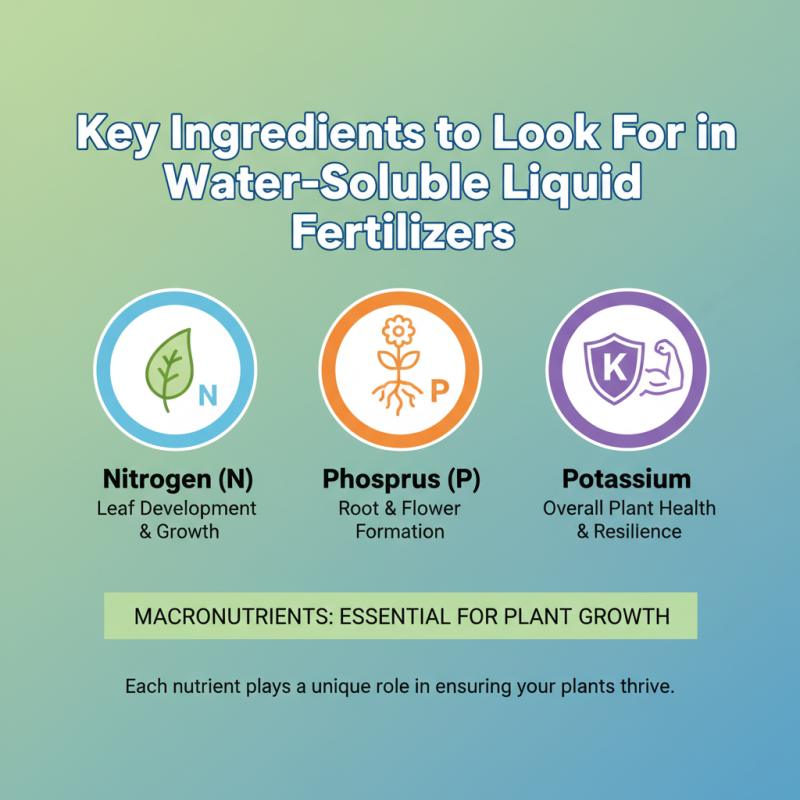
When selecting a water soluble liquid fertilizer, understanding key ingredients is essential. Look for macronutrients such as nitrogen, phosphorus, and potassium. These nutrients are crucial for plant growth. While nitrogen helps in leaf development, phosphorus promotes root and flower formation. Potassium enhances overall plant health. Each nutrient plays a unique role in ensuring your plants thrive.
Trace elements are also important. Micronutrients like iron, manganese, and zinc are needed in smaller amounts but are vital for plant functions. A deficiency in these can lead to growth issues. Some gardeners might overlook these micronutrients. However, they are just as critical as the major ones.
Always consider the ratio of these nutrients. Different plants have varying needs. Understanding these requirements can help you optimize your fertilizer choice. It’s common for beginners to make mistakes when interpreting labels. Strive to educate yourself before making a decision. Balancing nutrients is not easy, but it is rewarding when done right.
Choosing the Right NPK Ratio for Your Plants' Needs
Selecting the right NPK ratio for your plants is essential for optimal growth.
NPK stands for nitrogen (N), phosphorus (P), and potassium (K).
Each nutrient plays a critical role. For instance, nitrogen is vital for leaf development.
Phosphorus encourages root health and flowering. Potassium supports overall plant vigor.
Understanding the specific needs of your plants can be a bit tricky. Different plants require varied ratios depending on their growth stage.
For instance, leafy greens thrive on higher nitrogen levels.
Flowering plants benefit from a balanced ratio or higher phosphorus. It's important to analyze your plants’ conditions.
Too much of one nutrient can lead to deficiencies in another, resulting in poor growth.
It’s useful to reflect on your watering and fertilizing practices. Observing your plants regularly can provide clues about nutrient needs.
Yellowing leaves may signal a nitrogen deficiency. On the other hand, stunted root growth might indicate a lack of phosphorus.
Experiment with different ratios but proceed with caution. Sometimes, less is more when it comes to fertilization.
Application Methods for Effective Use of Liquid Fertilizers
Liquid fertilizers are popular for their quick absorption and effectiveness. However, using them correctly is crucial for achieving strong plant growth. Different application methods can enhance their impact and efficiency.
Foliar application is one effective technique. Spraying a diluted liquid fertilizer directly onto leaves allows plants to absorb nutrients rapidly. Use a fine mist sprayer for an even distribution. Timing matters too—early morning or late afternoon is ideal to minimize evaporation. This method, however, can lead to leaf burn if over-applied. Start with a lower concentration to gauge your plants' response.
Soil application is another common method. Mixing liquid fertilizers with irrigation water ensures deep root infiltration. This technique is especially beneficial for larger areas. However, it can dilute crucial nutrients, so monitoring soil nutrient levels is essential. Some growers face challenges balancing macro and micronutrients. Regular testing of soil samples can help optimize the fertility program. Ultimately, the choice of method depends on plant type and growth stage.
Common Mistakes to Avoid When Using Water Soluble Fertilizers
When using water-soluble fertilizers, common mistakes can hinder plant growth.
One significant error is over-fertilization. Many believe that more fertilizer equals better results.
However, excess nutrients can burn roots and harm plants. Always follow recommended dilution ratios.
Another mistake involves not considering plant needs. Different plants require different nutrient levels.
A one-size-fits-all approach often leads to deficiencies or excesses.
Take time to research specific requirements for your plants. Monitor their health regularly to adjust your application accordingly.
Timing is also crucial. Applying fertilizers during extreme weather can negate their benefits.
In hot weather, plants may absorb less and suffer from stress. Aim to fertilize during cooler times of the day,
ideally early morning or late afternoon. Consider the growth phase of your plants too.
Nutrient needs vary between seedlings and mature plants.