How to Use Water Soluble Fruit Tree Fertilizer Effectively?
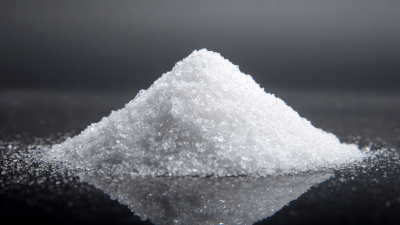
Water Soluble Fruit Tree Fertilizer is a game changer for fruit growers. This type of fertilizer dissolves easily in water. It delivers essential nutrients directly to the roots of trees. This ensures quick absorption for vibrant growth and fruitful yields.
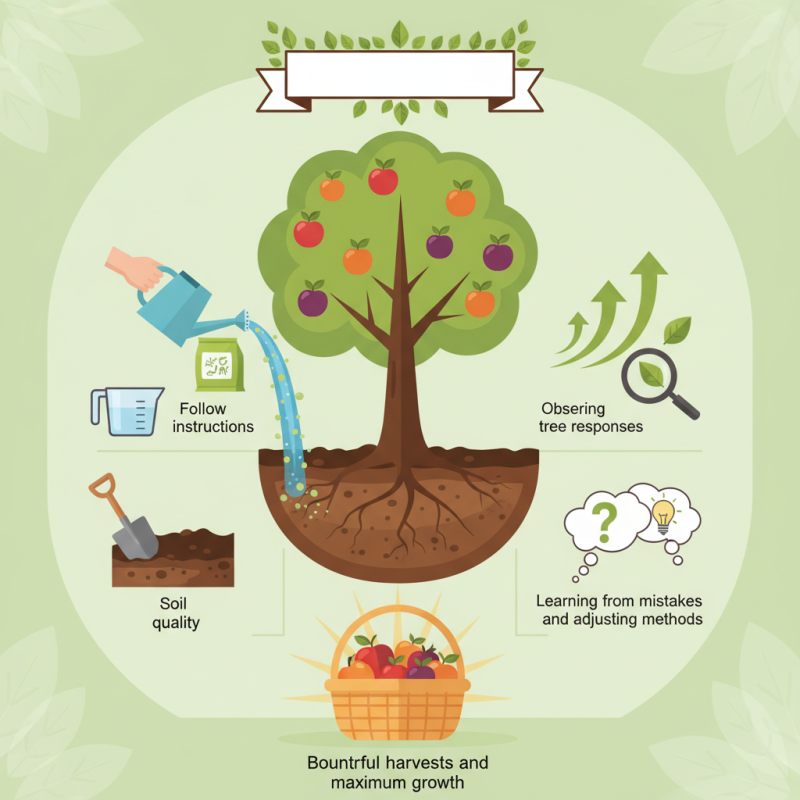
Using Water Soluble Fruit Tree Fertilizer requires careful attention. Over-fertilizing can harm plants. It's crucial to follow instructions on the package. Many people often underestimate the importance of soil quality. A good soil foundation enhances the effectiveness of the fertilizer. Still, some gardeners focus solely on fertilization, neglecting other factors.
Achieving the best results takes practice and patience. It's not just about using the right product. Observing tree responses and adjusting methods is vital. Learning from mistakes will improve your gardening skills. Effective use of Water Soluble Fruit Tree Fertilizer can lead to bountiful harvests, with maximum growth potential.
Understanding Water Soluble Fruit Tree Fertilizer and Its Benefits
Water soluble fruit tree fertilizers are designed to promote healthy growth and fruit production. These fertilizers are rich in essential nutrients like nitrogen, phosphorus, and potassium. According to the USDA, proper fertilization can increase fruit yield by as much as 20%. This is crucial for farmers aiming for higher productivity.
The benefits of water soluble fertilizers are immense. They allow for quick nutrient absorption, ensuring that trees receive what they need when they need it. Nutrients are readily available to roots. Interestingly, a study by the American Society of Horticultural Science shows that trees treated with these fertilizers exhibit faster growth rates compared to those that are not. However, it's essential to use them correctly; over-fertilization can lead to nutrient runoff and environmental damage.
Applying water soluble fertilizers at the wrong time can be counterproductive. Rainfall can wash away the nutrients before trees absorb them. Additionally, some growers may misuse application rates without considering tree size and soil conditions. Research indicates that a balanced approach increases both soil health and fruit quality. Understanding the specifics of your soil can guide better choices.
Choosing the Right Type of Water Soluble Fertilizer for Fruit Trees
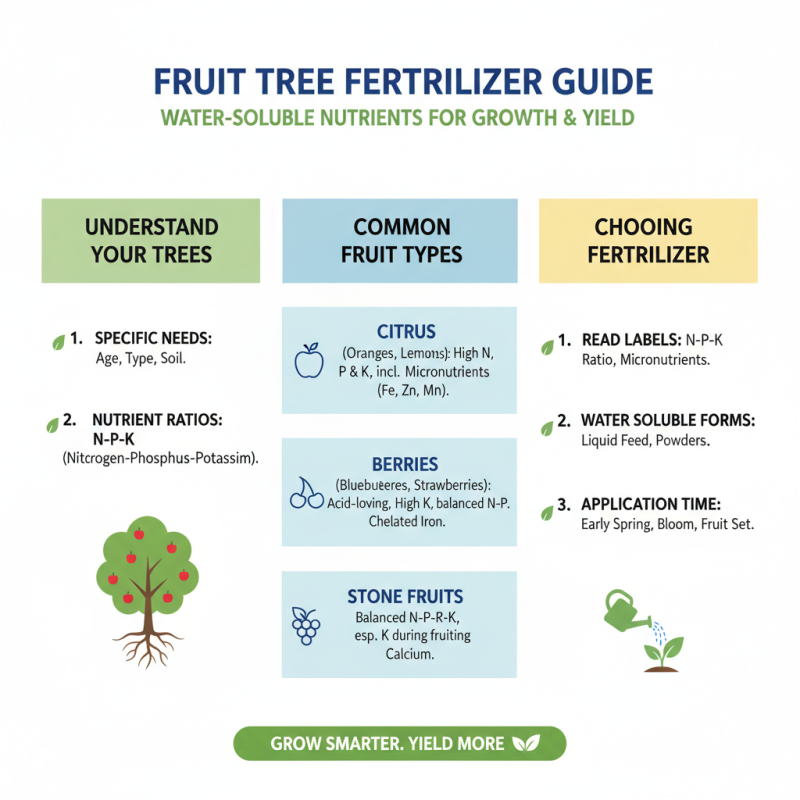
Choosing the right type of water-soluble fertilizer for fruit trees can be a challenging task. Not all fertilizers are created equal. It’s essential to consider the specific needs of your trees. Each fruit tree type has unique nutrient requirements. Understanding these requirements can help improve growth and yield.
Look for fertilizers that provide balanced nutrients, like nitrogen, phosphorus, and potassium. A proper ratio is key. Some formulas focus on promoting fruit growth, while others boost leaf development. You might change your choice based on the season. In spring, a nitrogen-heavy fertilizer may be ideal. As fruit begins to form, a different mix may be more beneficial.
Sometimes, gardeners make mistakes. They might apply too much fertilizer, which can harm the tree. Over-fertilization is a real concern. Signs include burnt leaf edges or stunted growth. Monitoring your trees after application is crucial. If you’re uncertain, start with a diluted solution. This way, you can adjust based on your tree’s response. Every tree is unique, and a little observation can go a long way.
Step-by-Step Guide to Applying Water Soluble Fertilizer
When applying water soluble fruit tree fertilizer, start by selecting the right concentration. Mix the fertilizer with water according to the package instructions. Ensure you dissolve it completely. You want a uniform mixture for even distribution. Use a sprayer for precise application. This method helps reach the tree's roots effectively.
Timing matters significantly. Apply the fertilizer during the growing season. Typically, spring to mid-summer is ideal. Observe your trees closely. Are the leaves turning yellow? It may signal nutrient deficiency. Water the trees well before applying fertilizer. This helps to reduce the risk of root burn, but it can be tricky. Overwatering may wash away nutrients.
After application, monitor your trees regularly. Look for signs of improvement or stress. Adjust the concentration and frequency as needed. Perhaps you've applied too much before. Reflect on your approach, and tweak it to better suit your trees’ needs. Remember, each tree is unique and requires tailored care.
Timing and Frequency of Fertilization for Optimal Results
Timing and frequency of fertilization are key to maximizing the effectiveness of water-soluble fruit tree fertilizer. Research indicates that proper timing can enhance nutrient uptake by up to 30%. For most fruit trees, early spring is the ideal time for the first application. This is when the trees begin their active growth phase. Fertilizing at this time supports blooming and fruit setting.
Applying water-soluble fertilizers every 4 to 6 weeks during the growing season can yield impressive results. Some studies suggest that trees treated every month may produce yields 20% higher than those fertilized bi-monthly. However, over-fertilization can lead to nutrient burn and poor fruit quality. It’s essential to monitor your trees for signs of stress or deficiency. Adjusting the schedule based on their growth can help.
Furthermore, environmental factors impact fertilization. Soil type, weather conditions, and tree species all play a role. A sandy soil may require more frequent applications, while clay retains nutrients longer. Observing the local climate can guide adjustments. Understanding these nuances will take time and may require trial and error. Stay vigilant and adapt your practices for optimal growth.
Optimal Timing and Frequency of Water Soluble Fruit Tree Fertilization
This chart illustrates the recommended amount of water soluble fertilizer for fruit trees throughout the year, showcasing a peak in fertilization during the spring and summer months, crucial for optimal growth and fruit production.
Best Practices for Storing and Handling Water Soluble Fertilizer
Storing and handling water-soluble fruit tree fertilizer requires attention to detail. These fertilizers can easily degrade if not stored properly. Keep them in a cool, dry place, away from direct sunlight. Temperature fluctuations can affect their effectiveness. A sealed container is ideal to prevent moisture absorption.
It's important to regularly check the storage conditions. Look for signs of clumping or discoloration, which indicate quality loss. If the fertilizer smells unusual, it may be time to replace it. Proper handling is also crucial. Use clean, dry tools when scooping out the fertilizer. This helps prevent contamination and maintains its potency.
Tips: Always label your containers. Include the date of purchase. Organize your storage area, so you know what you have on hand. Plan to use the fertilizer within the stated time frame. Regularly review your supplies to avoid waste. Stay mindful of any old, unused products that may linger.