What is Potassium Nitrate Fertilizer and How Does it Benefit Plants?
Potassium Nitrate Fertilizer plays a vital role in enhancing plant growth. Dr. Emily Thompson, an expert in horticultural science, states, "Potassium Nitrate is essential for robust plant health and vitality." This nutrient-rich fertilizer provides both potassium and nitrogen, which are crucial for various plant functions, including water regulation, enzyme activation, and photosynthesis.
Farmers and gardeners increasingly rely on Potassium Nitrate Fertilizer for its numerous benefits. This compound helps improve fruit quality, enhances flowering, and increases resistance to diseases. Its unique formulation allows plants to absorb nutrients efficiently, leading to healthier crops. However, over-reliance on this fertilizer can result in nutrient imbalances.
Balancing the use of Potassium Nitrate Fertilizer is essential for optimal plant growth. Mismanagement can lead to environmental concerns and potential harm to soil health. Therefore, understanding the right applications of this fertilizer is necessary for sustainable agriculture. There is a learning curve in employing this product wisely, emphasizing continuous education in soil health and nutrient management.

What is Potassium Nitrate Fertilizer?
Potassium nitrate fertilizer is a popular choice among farmers and gardeners. It is made up of potassium, which helps in plant growth, and nitrate, a form of nitrogen essential for plant health. This combination allows plants to thrive, especially during critical growth periods. Industry reports suggest that potassium nitrate accounts for approximately 20% of the global fertilizer market, reflecting its significant role in agriculture.
Many studies highlight the benefits of potassium nitrate. It enhances root development, improving nutrient uptake. Reports show that applying potassium nitrate can increase crop yield by 15% to 25%. This fertilizer also aids in the production of chlorophyll, promoting better photosynthesis. While potassium nitrate is effective, overuse can lead to nutrient imbalances in the soil. Farmers must monitor application rates closely to ensure sustainable practices.
The versatility of potassium nitrate makes it suitable for various crops, including fruits and vegetables. However, each crop may respond differently to its use. Some plants may show signs of nutrient burn if overdosed. It is crucial to test soil and plant tissue to tailor fertilizer use effectively. Far too often, a one-size-fits-all approach leads to wasted resources and environmental issues.
What is Potassium Nitrate Fertilizer and How Does it Benefit Plants?
| Nutrient |
Role in Plant Growth |
Benefits |
Recommended Application |
| Potassium (K) |
Regulates water uptake and improves drought resistance |
Enhances fruit quality and color |
Apply at planting and during the growing season |
| Nitrogen (N) |
Essential for protein synthesis and growth |
Promotes lush, green foliage |
Side-dress during active growth |
| Solubility |
Highly soluble for quick nutrient availability |
Fast-acting effects on plant health |
Mix with water for foliar application |
Chemical Composition and Properties of Potassium Nitrate
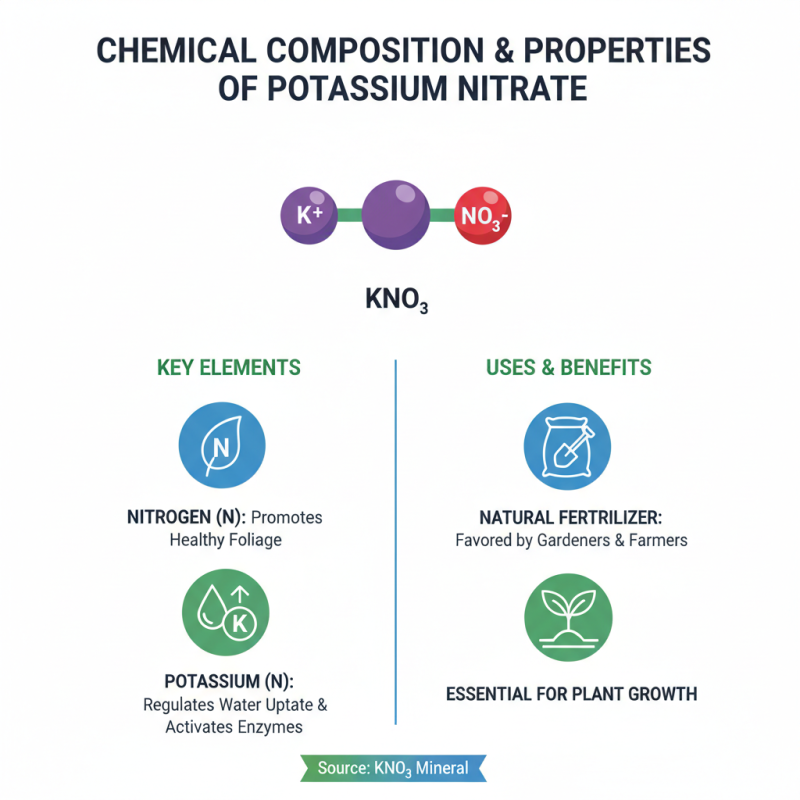
Potassium nitrate (KNO3) is a naturally occurring mineral essential for plant growth. It supplies two vital elements: potassium and nitrogen. Potassium regulates water uptake and activates enzymes, while nitrogen promotes healthy foliage. This blend makes potassium nitrate a favored fertilizer among gardeners and farmers.
The chemical composition of potassium nitrate involves 38% potassium and 13% nitrogen. Its solubility in water allows for quick absorption by plants. This quick uptake means rapid results, beneficial for crops needing immediate nutrient access. However, overapplication can lead to nutrient imbalances or environmental issues, warranting careful use.
**Tips:** Test your soil before application. This will prevent over-fertilization. Monitor your plants’ growth to spot any nutrient deficiencies early. Adjust your fertilizer routine accordingly, as not all plants have the same needs. Using potassium nitrate responsibly will yield healthier plants and better yields.
Benefits of Potassium Nitrate for Plant Growth
Potassium nitrate fertilizer plays a crucial role in plant growth. This compound supplies essential nutrients, primarily potassium and nitrogen. Research indicates that potassium aids in water regulation and enhances photosynthesis. Plants absorb these nutrients quickly, leading to more vigorous growth.
Field studies show that using potassium nitrate can increase crop yield by up to 20%. It helps crops resist disease and stress. For example, tomatoes treated with potassium nitrate had improved fruit quality and yield. On the other hand, excessive use may lead to nutrient imbalances in the soil.
While potassium nitrate offers significant benefits, it's important to approach its application carefully. Over-fertilization can harm beneficial soil microbes. Regular soil testing is recommended to avoid these pitfalls. Understanding the specific needs of plants will lead to better results. Balancing nutrient supply is key to maximizing growth while maintaining soil health.
Application Methods for Potassium Nitrate Fertilizer
Potassium nitrate fertilizer is recognized for its positive effects on plant growth. Its application methods can vary significantly based on crop needs and soil conditions. One popular method is fertigation, which involves applying potassium nitrate through irrigation systems. This technique ensures that plants receive a steady supply of nutrients, promoting better absorption. Studies show that fertigation can increase nutrient uptake efficiency by up to 30%.
Another effective application method is broadcasting. In this method, the fertilizer is spread evenly across the soil surface before planting. It can be particularly beneficial for root crops. However, careful consideration is needed. Over-application may lead to nutrient runoff, which can harm local water sources. According to the Fertilizer Institute, nearly 60% of all farmers report concerns about nutrient management practices.
Foliar application is also gaining traction. This method involves spraying the fertilizer directly onto plant leaves. Research indicates that foliar feeding can enhance growth in high-stress environments, like drought conditions. However, it requires precise timing and conditions. Misapplication can lead to leaf burn or nutrient imbalances. Balancing application methods with environmental sustainability is essential for maximizing benefits while minimizing risks.
Comparative Analysis with Other Fertilizers
Potassium nitrate is a popular fertilizer for many gardeners. It contains two essential nutrients: potassium and nitrogen. These elements help plants grow stronger and healthier.
When comparing potassium nitrate to other fertilizers, key differences emerge. For instance, some fertilizers focus solely on nitrogen but lack potassium. This dual nutrient provision makes potassium nitrate unique, enhancing both root health and overall vigor.
Interestingly, while potassium nitrate is effective, it can be overdone. Excessive use may lead to nutrient imbalances in the soil. Many gardeners overlook this risk. Understanding the right application rates is crucial. It's vital to conduct soil tests before making any decisions. This helps in tailoring the fertilizer to specific plant needs.
Other fertilizers offer different benefits. For example, slow-release fertilizers provide nutrients gradually. This method can prevent leaching and ensure consistent nutrient supply. However, they might not address immediate nutrient deficiencies. Many gardeners find themselves stuck between quick and slow-release options. Each choice comes with its own set of potential drawbacks. Therefore, a well-rounded approach to fertilization often yields the best results.