Leave Your Message

2026 Best Water Soluble Fish Fertilizer for Global Buyers

Global buyers are entering 2026 with stronger interest in efficient, low-waste crop nutrition. Water Soluble Fish Fertilizer fits this shift. It dissolves quickly, supports fertigation, and can reach roots through drip systems. However, “best” depends on crop needs, climate, regulations, and application equipment. A greenhouse grower in Spain may prioritize low odor and filtration performance. A field producer in Kenya may value shelf stability and shipping reliability.

The International Fertilizer Association’s Medium-Term Fertilizer Outlook 2023–2027 projects continued global fertilizer demand growth. Its analysis also highlights efficiency, nutrient stewardship, and resilient supply chains. FAO’s World Food and Agriculture Statistical Yearbook 2023 shows the continuing scale of global crop production and fertilizer use. These reports support a practical point: buyers need measurable performance, not attractive packaging. Solubility, nitrogen content, pH, amino acids, raw-material origin, and contaminant testing deserve careful review.

Soil scientist Dr. Elaine Ingham has often stated, “Soil is not dirt; it is a living ecosystem.” That principle matters when evaluating fish-based inputs. A quality Water Soluble Fish Fertilizer should complement soil biology without creating clogging, odor, or inconsistent nutrient delivery. Product claims still require scrutiny. Not every “organic” label means the same thing worldwide. Certification rules vary. Laboratory data can also differ between batches. This guide compares leading 2026 options through a buyer-focused lens, combining technical evidence, field practicality, and supplier reliability. No product is perfect. That deserves honest attention.

2026 Best Water Soluble Fish Fertilizer for Global Buyers

What Makes Water-Soluble Fish Fertilizer Effective in 2026

For global buyers in 2026, effective water-soluble fish fertilizer starts with predictable nutrients, not a strong ocean smell. The International Fertilizer Association’s 2024 outlook projects global fertilizer demand will approach 205 million tonnes of nutrients by 2028. This pressure encourages efficient, measurable products. A reliable formula should disclose soluble nitrogen, phosphorus, potassium, calcium, and micronutrient levels. It should also show pH, electrical conductivity, moisture, and batch testing results.

Fish-derived ingredients can supply amino acids, peptides, and organic carbon alongside plant nutrients. FAO’s State of World Fisheries and Aquaculture 2024 reported 185.4 million tonnes of global aquatic animal production in 2022. This creates substantial processing byproducts, but availability does not prove agronomic value. Hydrolysis temperature, filtration, storage, and dilution can change performance. Small details matter. A product that clogs a drip line is not effective in practice.

Field experience suggests buyers should request replicated crop trials, not only laboratory claims. Compare treated and untreated plots under the same irrigation, soil, and weather conditions. Measure leaf color, root mass, marketable yield, and nutrient-use efficiency. The uncomfortable point is that fish fertilizer may perform unevenly in cold soils or heavily fertilized fields. More product is not automatically better. Independent test reports, traceable sourcing, and clear application rates make purchasing decisions more defensible. USDA and FAO guidance also supports checking nutrient declarations and handling requirements before import or farm use.

Key Nutrients and Benefits for Different Crops

2026 Best Water Soluble Fish Fertilizer for Global Buyers

Key nutrients determine whether water-soluble fish fertilizer benefits a crop or simply adds cost. Fish-based formulas usually supply organic nitrogen, phosphorus, potassium, calcium, and trace elements. Their exact analysis varies with raw materials and processing. Buyers should request guaranteed nutrient percentages, solubility data, microbial testing, and contaminant certificates. Numbers matter.

Leafy greens often respond to moderate nitrogen, supporting rapid leaf expansion and deeper green color. Excess nitrogen can create soft growth, however, so spinach and lettuce still need careful dosing. Fruiting crops require balanced nitrogen with stronger phosphorus and potassium support during flowering and fruit filling. Tomatoes, peppers, and cucumbers may also benefit from calcium and micronutrients, especially under fertigation. Root crops need restraint. Too much nitrogen can produce large tops and disappointing roots.

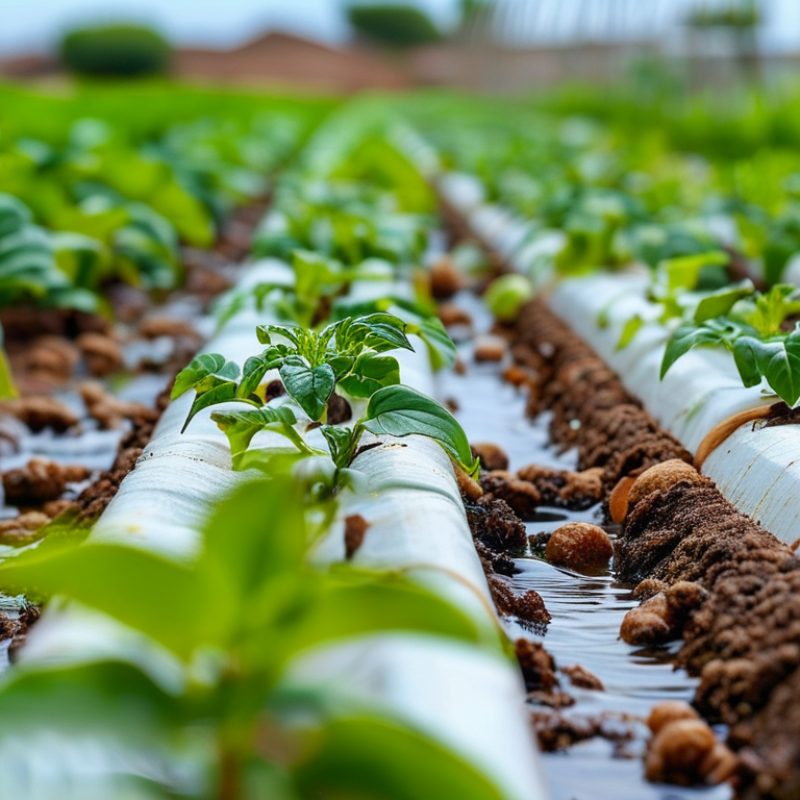
IFA’s 2024 fertilizer outlook places global fertilizer demand near 200 million tonnes of nutrients annually. This reinforces the need for efficient nutrient management, not indiscriminate application. FAO AQUASTAT reports that agriculture uses about 70% of global freshwater withdrawals, making soluble products attractive for precise irrigation systems. Yet that promise can be overstated. Fish fertilizer does not replace soil testing or a complete nutrient plan. I would compare crop tissue results, water quality, pH, and salinity before selecting a 2026 supply. A small jar test is wise. Solubility claims sometimes look better on paper than in a clogged injector.

2026 Best Water Soluble Fish Fertilizer for Global Buyers

Key nutrient priorities and crop benefits

How to read this chart: The relative nutrient emphasis index reflects common agronomic priorities for major crop groups, where 100 indicates the highest emphasis within this comparison. Nitrogen supports vegetative growth, phosphorus supports early root development and energy transfer, and potassium supports water regulation, crop quality and stress tolerance. A soluble fish fertilizer should be selected according to soil tests, crop stage, local regulations and the product’s guaranteed N-P-K analysis.
Leafy Greens

Higher nitrogen emphasis supports leaf expansion, canopy development and green color. Avoid excessive nitrogen close to harvest.

Root Crops

Balanced phosphorus and potassium support root establishment, carbohydrate movement and storage-organ development.

Fruiting Vegetables

Potassium becomes especially important during flowering, fruit filling and quality development, while nitrogen should remain balanced.

Orchards

Potassium supports fruit size and quality, while nitrogen helps maintain canopy growth and productive leaf area.

How to Compare Fish Fertilizer Quality and Solubility

For global buyers, the best water-soluble fish fertilizer in 2026 should be judged by measurable performance, not color or smell. The IFA 2024–2028 Medium-Term Fertilizer Outlook expects global fertilizer demand to approach 200 million tonnes of nutrients annually by 2028. That scale makes consistency important. Compare total nitrogen, available phosphorus, potassium, organic matter, and amino nitrogen on a dry-weight basis. A higher liquid volume does not always mean higher nutrient value.

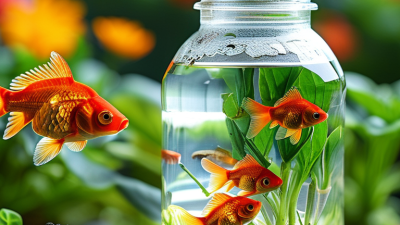
Test solubility under a clear, repeatable condition. Use the same water temperature, concentration, mixing time, and filter size for every sample. Check the solution after 30 minutes. Look for sediment, floating oil, gel particles, and nozzle-clogging residue. A practical buyer test uses 1% fertilizer in water at 20°C, followed by filtration and weighing of remaining solids. Also review pH, density, moisture, ash, chloride, and heavy-metal results in a recent certificate of analysis. Small details matter.

FAO AQUASTAT reports that agriculture accounts for roughly 70% of global freshwater withdrawals, so efficient fertigation deserves attention. Yet solubility claims can be overstated. One batch may dissolve cleanly while another settles during storage. Temperature changes expose this weakness. I would request three batch records, not one. Packaging, storage temperature, and transport time also need review. Laboratory data improves confidence, but field testing remains necessary. A small trial may reveal leaf burn, filter blockage, or uneven application that paperwork misses.

Global Buyer Guide to Safety, Certification, and Compliance

2026 Best Water Soluble Fish Fertilizer for Global Buyers

Global Buyer Guide to Safety, Certification, and Compliance

The best water soluble fish fertilizer is not chosen by nutrient numbers alone. Buyers should examine raw material origin, processing records, and batch consistency. A clear certificate of analysis should list nitrogen, phosphorus, potassium, moisture, pH, and solubility. It should also report heavy metals and microbiological results where required. Ask for recent test dates, not only a general product sheet. Small details matter.

Check the safety data sheet before discussing shipment terms. It should explain handling, storage temperature, spill response, and transport classification. Packaging needs strong inner liners, readable labels, batch codes, net weight, and production dates. A leaking bag can damage an entire container. That practical risk is easy to underestimate. Buyers should also confirm whether the product requires fertilizer registration in the destination market. Requirements may differ between countries, regions, and even states.

Certification claims need careful verification. Request copies of relevant conformity documents and confirm the issuing laboratory’s accreditation. Organic suitability, if advertised, must match the importing market’s rules. A certificate alone does not prove every shipment is compliant. Independent pre-shipment testing can reduce uncertainty, especially for first orders. It may feel expensive, but one failed inspection costs more. I have found that overly simple checklists create false confidence. Product formulas can change, while old documents remain in circulation. Keep approval records, test reports, labels, and supplier declarations together for each batch. No process is perfect. Regular review is still necessary.

Application Methods, Storage, and Supplier Selection Criteria

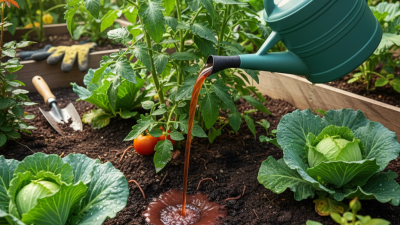
For global buyers, the best water soluble fish fertilizer is not simply the darkest or strongest-smelling product. It should dissolve quickly, apply evenly, and match local crop needs. Start with a jar test. Mix the recommended dose in clean water and check for sediment after 30 minutes. Drip systems need finer filtration than foliar spraying. Apply during cooler hours, and avoid mixing with alkaline products unless compatibility has been verified.

Field experience shows that small mistakes can reduce performance. One trial used hard irrigation water, and the solution formed flakes inside the tank. The fertilizer was not necessarily defective; water chemistry was overlooked. Buyers should request solubility data, nutrient analysis, pH range, moisture content, and contaminant testing. A clear certificate of analysis is useful, but it should match the actual production lot. Independent testing is worth considering for large shipments.

Storage conditions affect product reliability. Keep sealed bags or containers in a dry, shaded warehouse, away from heat, rain, and agricultural chemicals. Use pallets to prevent contact with damp floors. Suppliers should provide batch numbers, production dates, shelf-life guidance, packaging options, and transport documents. Check whether their factory follows consistent quality procedures and can support import requirements in the destination market. Price matters, but poor traceability can cost more than a higher quotation. I would still review a sample shipment before committing to a full container.

2026 Best Water Soluble Fish Fertilizer for Global Buyers - Application Methods, Storage, and Supplier Selection Criteria
Product Type Typical Nutrient Profile Best-Fit Crops and Uses Recommended Application Method Water and Mixing Guidance Storage Requirements Key Buying Criteria
Hydrolyzed Fish Fertilizer Usually contains a moderate amount of organic nitrogen, with smaller amounts of phosphorus and potassium. Nutrient analysis varies by raw material and processing method. Vegetables, herbs, fruit trees, field crops, lawns, and soil-building programs where gradual nutrient release is preferred.
  • Root-zone drench or soil application.
  • Fertigation through a compatible irrigation system.
  • Foliar use only when the product label specifically permits it.
Use clean water and follow the guaranteed analysis and label dilution rate. Agitate liquid products before use and conduct a small compatibility test before tank mixing. Keep sealed in a cool, dry, shaded, well-ventilated area. Protect from freezing, excessive heat, direct sunlight, and contamination. Confirm raw-material traceability, guaranteed nutrient analysis, batch consistency, odor-control measures, and documentation for organic or conventional use.
Enzymatically Hydrolyzed Fish Soluble Provides soluble organic nitrogen and may contain peptides, amino acids, and naturally occurring micronutrients. The exact composition depends on the source and hydrolysis process. Transplant establishment, vegetables, berries, nursery plants, greenhouse crops, and crops under moderate nutrient stress.
  • Low-volume fertigation.
  • Root drench during transplanting or early growth.
  • Foliar spray when label-approved and properly filtered.
Dissolve or dilute according to the product specification. Avoid highly alkaline tank mixtures unless compatibility has been verified. Use filtered water for drip systems. Store in the original, tightly closed container. Avoid prolonged storage after dilution and clean application equipment after use. Request solubility data, filtration guidance, pH range, microbial specifications, shelf-life testing, and certificates of analysis for representative batches.
Fish Emulsion Concentrate Commonly supplies organic nitrogen and small amounts of phosphorus and potassium. It is generally a liquid concentrate rather than a fully mineralized fertilizer salt. Home gardens, horticultural crops, fruit trees, ornamental plants, and soil-applied maintenance programs.
  • Diluted soil drench.
  • Furrow or band application where permitted.
  • Fertigation only if the concentrate is suitable for the irrigation equipment.
Shake or agitate before dilution. Do not apply concentrated material directly to plant roots or foliage. Apply during cooler parts of the day and follow label intervals. Keep away from heat and direct sunlight. Prevent container damage and store separately from food, feed, and strong oxidizing materials. Evaluate odor management, sediment level, pumpability, container integrity, international transport classification, and country-specific fertilizer registration.
Fish Soluble Powder A dried, water-dispersible fish-based fertilizer. The guaranteed N-P-K values and moisture content must be verified from the technical specification. Export shipments, dry blending, greenhouse production, fertigation, and operations seeking lower transport water content.
  • Pre-dissolve in a clean mixing tank.
  • Apply through fertigation after filtration.
  • Use as a soil drench when the label provides a dilution rate.
Add powder gradually to water while agitating. Allow complete dispersion before application. Check for sediment and filter the solution when using drip irrigation. Store in moisture-resistant, sealed packaging on pallets. Keep dry, cool, and protected from humidity, pests, and strong odors. Check moisture content, particle-size distribution, dispersibility, anti-caking performance, packaging strength, net-weight accuracy, and palletization standards.
Fish-Based NPK Blend Combines fish-derived organic nutrients with additional nutrient sources to achieve a defined nitrogen, phosphorus, and potassium analysis. Crops requiring a more targeted nutrient program, including vegetables, fruiting crops, ornamentals, and commercial nurseries.
  • Fertigation where fully soluble and equipment-compatible.
  • Soil drench or band application.
  • Foliar application only if expressly approved on the label.
Follow the guaranteed analysis rather than relying on a generic dosage. Consider soil-test results, crop demand, irrigation volume, and the risk of salt accumulation. Keep dry products away from humidity. For liquid products, prevent freezing and excessive heat. Rotate inventory using first-in, first-out procedures. Verify nutrient sources, chloride and sodium levels, pH, electrical conductivity, solubility percentage, heavy-metal limits, and local regulatory compliance.
Micronutrient-Enriched Fish Fertilizer Fish-derived nutrients supplemented with selected micronutrients such as iron, zinc, manganese, boron, or other elements, depending on the formulation. Crops with confirmed or suspected micronutrient deficiencies, high-value horticulture, greenhouse crops, and soils with restricted nutrient availability.
  • Root-zone application based on soil or tissue analysis.
  • Fertigation with adequate filtration.
  • Foliar application only at label-approved concentrations.
Avoid mixing with products that can cause precipitation. Perform a jar test, monitor solution pH, and do not exceed crop-specific micronutrient limits. Store tightly closed in a dry, temperature-controlled area. Protect from moisture and keep liquids from freezing or overheating. Require a complete micronutrient declaration, impurity limits, compatibility information, analytical test methods, and clear application restrictions.
Application Timing Nutrient demand generally changes by crop stage. Fish-based fertilizers are commonly used during establishment and vegetative growth, subject to crop needs. Transplanting, early vegetative development, recovery from non-pathogenic stress, and maintenance feeding programs. Apply after irrigation planning and avoid runoff. Split applications can improve nutrient-use efficiency compared with one excessive application. Use soil tests, tissue tests, irrigation-water analysis, and the product label to set rates. Do not assume that organic origin eliminates the risk of overapplication. Keep opened inventory properly sealed and clearly dated. Monitor changes in odor, viscosity, color, caking, or visible contamination. Select suppliers that provide crop-specific use guidance, multilingual labels, technical support, and reliable batch-to-batch documentation.
Global Supplier Evaluation Product quality should be judged by verified specifications and test results rather than by product category alone. Suitable for importers, distributors, growers, contract manufacturers, and agricultural input procurement teams. Request pre-shipment samples and test them with the intended water source, injector, filter, and application equipment. Confirm dilution instructions, water-quality tolerance, filtration requirements, mixing sequence, pH range, and wastewater or rinse-water handling guidance. Review shelf life, recommended transport temperature, packaging format, container closure, lot coding, and storage conditions on the technical data sheet.
  • Guaranteed nutrient analysis and certificate of analysis.
  • Traceable raw materials and documented quality-control procedures.
  • Regulatory documents for the destination market.
  • Consistent lead times, minimum order quantities, and export packaging.
  • Clear claims regarding organic suitability, without unsupported certifications.
Buyer note: Always follow the destination country’s fertilizer regulations and the product label. Application rates should be adjusted to crop requirements, soil or water test results, irrigation conditions, and the supplier’s guaranteed analysis.