Leave Your Message

Why Choose Calcium Nitrate Fertilizer?

Why Choose Calcium Nitrate Fertilizer?

Modern crop production demands more than basic nitrogen supply. It requires nutrients that move efficiently through irrigation systems and reach active roots. Calcium Nitrate provides nitrate nitrogen and soluble calcium in one fertilizer. This combination can support steady vegetative growth, stronger tissues, and improved fruit quality when soil conditions are suitable.

The Food and Agriculture Organization reported global inorganic fertilizer use at about 185 million tonnes of nutrients in 2021. That figure reflects agriculture’s dependence on mineral nutrition, but it does not prove that every crop needs more fertilizer. The IFA Medium-Term Fertilizer Outlook 2024–2028 also highlights continuing pressure to improve nutrient-use efficiency. Calcium Nitrate can help in fertigation because it dissolves readily and avoids the ammonium component found in some nitrogen fertilizers.

Dr. Patrick Brown, a plant nutrition specialist at the University of California, has stated, “Calcium is essential for cell wall strength and membrane integrity.” This principle explains its value in tomatoes, peppers, lettuce, and other high-value crops. Calcium supports firm tissues, while nitrate nitrogen encourages predictable uptake under well-managed conditions.

The details matter. A grower may see pale leaves, weak stems, or blossom-end rot near harvest. Calcium Nitrate might help, but it is not a universal repair. Water movement, root health, pH, salinity, and irrigation timing still control results. That is the uncomfortable part.

More fertilizer is not always better. Careful testing remains essential.

Choosing Calcium Nitrate should therefore depend on crop demand, water quality, soil analysis, and a measured nutrient plan.
Why Choose Calcium Nitrate Fertilizer?

What Is Calcium Nitrate Fertilizer?

Why Choose Calcium Nitrate Fertilizer?

Calcium nitrate fertilizer is a water-soluble inorganic salt. Its formula is Ca(NO3)2. It supplies two important nutrients: nitrate nitrogen and calcium. Plants can absorb nitrate nitrogen quickly through their roots. Calcium supports cell walls, root development, and firm new growth. This combination makes the fertilizer useful for vegetables, fruit crops, flowers, and greenhouse plants.

It dissolves easily in irrigation water. Growers often apply it through fertigation or as a carefully measured soil dressing. A tomato plant with weak new leaves may benefit when calcium availability is low. Lettuce can also show stronger, cleaner growth under suitable calcium nutrition. However, yellow leaves do not always mean nitrogen deficiency. Poor roots, compacted soil, or disease may cause similar symptoms. A soil or tissue test gives more dependable guidance than appearance alone.

Calcium nitrate does not improve every soil problem. It cannot replace balanced fertilization, proper watering, or good drainage. Excessive use may increase nitrate leaching, especially after heavy rain. It may also raise salt levels around roots. Never mix it directly with products containing concentrated phosphate or sulfate, because unwanted deposits can form. Follow the crop’s nutrient plan and measure accurately. More fertilizer is not always better. That lesson is easy to forget.

Why Choose Calcium Nitrate Fertilizer? - What Is Calcium Nitrate Fertilizer?

Key properties, agronomic advantages, handling characteristics, and practical considerations

Data Dimension Calcium Nitrate Fertilizer Agronomic or Practical Significance
Chemical identity Calcium nitrate tetrahydrate: Ca(NO3)2·4H2O Provides both nitrogen and calcium in a readily soluble mineral salt form.
Typical fertilizer analysis 15.5% total nitrogen and approximately 19% calcium by mass Supplies two essential nutrients in one product. The exact guaranteed analysis may vary by formulation and local fertilizer regulations.
Nitrogen form Primarily nitrate nitrogen (NO3−) Nitrate nitrogen is immediately available for plant uptake and does not require soil microbial conversion before absorption.
Calcium function Soluble calcium supplied directly to the crop root zone or nutrient solution Calcium supports cell-wall structure, root development, membrane stability, and the quality of actively growing tissues.
Water solubility Highly soluble in water; commonly used in fertigation and nutrient solutions Allows rapid dissolution and precise delivery through irrigation systems when water quality and injection procedures are properly managed.
Speed of nutrient availability Fast availability after dissolution and application Useful for crops with high short-term nitrogen demand or for correcting situations where rapid nitrate and calcium supply is required.
Effect on soil reaction Generally considered less acidifying than ammonium-based nitrogen sources Can be useful where maintaining a balanced root-zone pH is important, although the final effect depends on soil, irrigation water, crop uptake, and application rate.
Common application systems Broadcast or band application, fertigation, greenhouse production, hydroponic nutrient programs, and foliar formulations designed for calcium delivery Its solubility and nutrient profile provide flexibility across field crops, vegetables, fruit crops, ornamentals, and protected cultivation.
Compatibility limitation Do not mix concentrated calcium nitrate solutions with concentrated phosphate or sulfate fertilizers Calcium can react with phosphate or sulfate and form low-solubility compounds. Separate injection tanks or adequate dilution and jar testing are recommended.
Moisture behavior Hygroscopic; absorbs moisture from humid air Store in a dry, cool, well-ventilated area using sealed, moisture-resistant packaging to reduce caking and handling problems.
Combustion and storage consideration Oxidizing nitrate salt; keep away from heat, flames, combustible materials, and incompatible chemicals Follow the product safety data sheet, local regulations, and responsible fertilizer-storage practices.
Best-fit crop situations Crops requiring readily available nitrate nitrogen together with calcium, especially during vigorous vegetative growth and fruit or quality development Often considered when soil or irrigation-water calcium supply is inadequate, or when an ammonium-free nitrogen source is preferred.
Potential limitations Contains no phosphorus or potassium; repeated heavy applications can contribute nitrate leaching where irrigation or rainfall exceeds crop demand Use soil, tissue, and water analysis to build a balanced nutrient program and avoid unnecessary nitrogen losses.
Recommended decision basis Use according to crop demand, soil and water test results, target yield, growth stage, and local agronomic guidance The correct rate and timing are site-specific. Calcium nitrate should complement, rather than replace, a complete nutrient-management plan.
Important note: Nutrient percentages, solubility, application methods, and safety requirements can differ among fertilizer grades and jurisdictions. Always check the guaranteed analysis and safety data sheet for the specific product being used.

How Does Calcium Nitrate Fertilizer Work?

Why Choose Calcium Nitrate Fertilizer?

How Does Calcium Nitrate Fertilizer Work?

Calcium nitrate dissolves quickly in moist soil or irrigation water. It separates into calcium ions and nitrate ions. Plant roots can absorb both forms without waiting for lengthy microbial conversion. Nitrate supplies nitrogen for chlorophyll, proteins, and steady leaf growth. Calcium strengthens cell walls and supports new root and shoot tissue.

The process is visible in active crops. A tomato plant may produce firmer stems and cleaner new leaves when calcium reaches growing points. However, calcium moves mainly with water through the xylem. Dry soil, damaged roots, or weak transpiration can limit delivery. Adding more fertilizer will not repair poor irrigation. That mistake is easy to make.

Calcium nitrate is useful when a crop needs rapid nitrogen and available calcium. It can support leafy vegetables, fruiting plants, and greenhouse crops during demanding growth stages. Soil testing should guide the rate. Excess nitrate may leach after heavy watering, while excessive salts can stress roots. I have seen growers focus on greener leaves and overlook root-zone balance. That approach needs reconsideration. Splitting applications into smaller doses often gives more control. Avoid mixing concentrated calcium nitrate directly with phosphate or sulfate fertilizers, because cloudy precipitates can form and block equipment. Clean water, accurate measurement, and regular observation matter more than a stronger solution.

What Nutrients Does It Provide to Plants?

Calcium nitrate fertilizer supplies two immediately useful nutrients: nitrate nitrogen and soluble calcium. Nitrate nitrogen supports chlorophyll, leaf expansion, and steady vegetative growth. Plants can absorb it quickly through moist roots. Calcium helps build cell walls and supports membrane strength. It also moves mainly with water through the plant. That detail matters. New leaves and developing fruit often show the earliest shortage symptoms. Calcium nitrate does not provide phosphorus, potassium, or trace elements. It is not a complete fertilizer.

In greenhouse tomatoes, peppers, and leafy vegetables, I have seen nitrate nitrogen produce greener growth within a short feeding cycle. Calcium can help firm young tissue and reduce problems linked with uneven calcium delivery, such as blossom-end rot. However, fertilizer cannot repair damaged roots or replace consistent irrigation. That lesson is easy to overlook. Calcium uptake depends on water movement, root health, and transpiration. Dry growing media followed by heavy watering may still create uneven results.

A soil or water test should guide the application rate. Excess nitrate may encourage soft growth, while unused nitrogen can leach beyond the root zone. I prefer smaller, measured applications and regular observation of leaf color, growth balance, and fruit quality. The right rate varies with crop, soil, weather, and growth stage. Even experienced growers can overfeed when plants look hungry. Check the roots too; the leaves do not tell the whole story.

When Should Calcium Nitrate Fertilizer Be Used?

Why Choose Calcium Nitrate Fertilizer?

Calcium nitrate fertilizer supplies readily available nitrate nitrogen and soluble calcium. It is most useful when crops need fast nutrition during active growth. Growers commonly apply it after transplanting, during flowering, and while fruits are enlarging. These stages can place heavy demand on calcium and nitrogen.

When Should Calcium Nitrate Fertilizer Be Used?

Use it when soil tests, tissue tests, or crop symptoms suggest calcium or nitrate deficiency. Young leaves may become distorted, while fruit can develop disorders such as blossom-end rot. However, calcium nitrate is not a perfect cure. Inconsistent watering often causes these problems, even when soil calcium is adequate. Apply smaller doses through fertigation when possible, especially in sandy soil where nutrients leach quickly. Avoid routine applications without testing. Excess nitrogen may produce soft, leafy growth and delay fruit maturity.

Tips: Apply calcium nitrate to moist soil, then irrigate evenly. Do not mix concentrated solutions with phosphate or sulfate fertilizers. Check local recommendations for crop rate and timing. Keep records of application, weather, and plant response. This simple habit can reveal mistakes. A field may appear deficient, but salt stress, damaged roots, or poor drainage can create similar symptoms. Recheck the crop before increasing the rate.

How Can Calcium Nitrate Fertilizer Be Applied Safely?

Why Choose Calcium Nitrate Fertilizer?

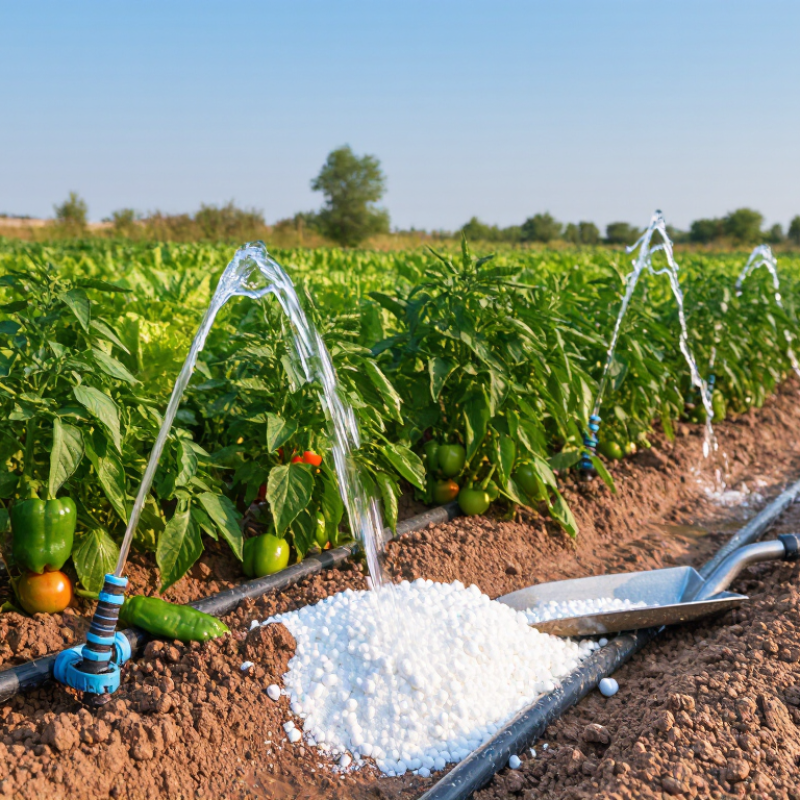
Calcium nitrate supplies soluble calcium and nitrate nitrogen in one application. Calcium supports firm cell walls, while nitrogen promotes steady leaf and stem growth. Its fast solubility suits drip irrigation, greenhouse beds, and carefully managed field crops. However, quick availability can also encourage overfeeding. More fertilizer does not always mean better growth.

Apply it only after checking soil or leaf test results. Follow the product label and local agricultural guidance. Wear gloves, eye protection, long sleeves, and a dust mask when handling dry granules. Measure accurately. Avoid applying fertilizer to dry, heat-stressed plants. Water the root zone afterward, but prevent runoff into drains, ponds, or streams.

Keep concentrated calcium nitrate solutions separate from phosphate or sulfate fertilizers. Mixing them can create insoluble deposits and block irrigation lines. Use a clean, clearly marked container. Store the material sealed, dry, and away from heat, fuels, and other incompatible products. For foliar use, test a small area first and spray during cool, calm weather. Leaf burn is possible. I once underestimated how quickly a warm greenhouse surface dried a spray, so small-scale testing remains a sensible safeguard. Recheck plant response after several days, rather than repeating an application too quickly.

Why Choose Calcium Nitrate Fertilizer?

Calcium nitrate provides readily available nitrate nitrogen and calcium in a highly soluble fertilizer grade. The chart compares representative nutrient analyses of common fertilizer types, expressed as nutrient elements by mass.

How Can Calcium Nitrate Fertilizer Be Applied Safely?

  • Follow the product label and base the application rate on a soil, water, or crop test.
  • Dissolve the fertilizer gradually in clean water to reduce dust, splashing, and undissolved material.
  • Do not mix concentrated calcium nitrate in the same stock tank with phosphate or sulfate fertilizers because precipitates may form.
  • Wear gloves, protective eyewear, and suitable work clothing during handling.
  • Store it in a cool, dry, well-ventilated place away from fuels, organic materials, and other combustible substances.

Representative fertilizer analyses: calcium nitrate 15.5% total nitrogen and 19.0% calcium; urea 46.0% nitrogen; potassium nitrate 13.7% nitrogen and 38.7% potassium. Actual specifications may vary by applicable fertilizer standard and product label.