Choosing a reliable Water Soluble Potash Fertilizer supplier involves more than comparing prices. Buyers need to assess product specifications, production consistency, documentation, and the supplier’s ability to meet delivery requirements. China offers a broad supplier landscape, but capabilities can differ substantially between companies. Details matter.
This guide introduces ten Chinese suppliers for buyers to research, rather than presenting an unverified ranking. It explains what to check when comparing products such as potassium sulfate and other water-soluble potassium formulations. Review the stated potassium content, solubility, chloride levels, and insoluble matter against your crop, irrigation system, and application plan. Ask for evidence. Current technical data sheets, safety documentation, and representative batch reports can help confirm whether a product matches its description. Independent testing may be appropriate for larger or recurring orders.
Supplier selection also depends on practical factors. Confirm production capacity, packaging options, export experience, lead times, and communication quality directly with each company. A polished website is not proof of stable quality, and a low quotation may omit important costs or service details. Ask specific questions and keep the answers on record. This sounds basic, but it is easy to overlook during a busy purchasing cycle.
The right choice depends on your agronomic needs and purchasing conditions, not a single list. Use the profiles as a starting point, verify current claims, and request samples or documentation before making a commitment. Even a careful review has limits; product performance should be assessed under local conditions.

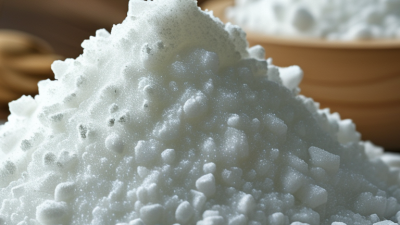
Water-soluble potash fertilizer provides potassium in forms that dissolve in water, allowing crops to absorb it through roots or leaves. Potassium supports water regulation, enzyme activity, and the movement of sugars within plants. It is especially important during fruit development and other periods of active growth. Fertilizer labels commonly express potassium as K₂O equivalent, so that figure is not the same as the product’s elemental potassium content. Check the analysis before comparing products.
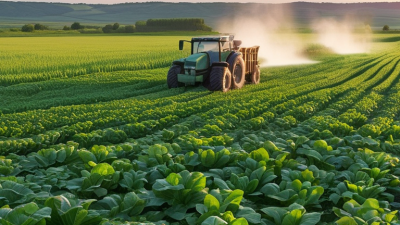
Growers commonly apply soluble potash through drip irrigation, fertigation, or carefully managed foliar sprays. For example, a measured amount may be dissolved in an irrigation tank and delivered near the root zone. Follow the product label and crop guidance for rates. Too much can raise the salt concentration around roots, while spraying in hot sunlight may scorch leaves. Small details matter.
Compatibility deserves attention. Some fertilizers form deposits when mixed with hard water or certain calcium products. Test a small jar first, and use clean water where possible. A clear tank is reassuring, but it does not prove the mix is safe for every crop. Soil or tissue testing can help identify whether potassium is actually needed. More fertilizer is not automatically better.
Water-soluble potash fertilizers supply potassium for crops and are commonly applied through fertigation. Typical grades contain about 60% K₂O in potassium chloride, 50% in potassium sulfate, 46% in potassium nitrate, and 34% in monopotassium phosphate. Choose a source according to crop needs: potassium nitrate also supplies nitrogen, potassium sulfate supplies sulfur, and monopotassium phosphate supplies phosphorus. Potassium chloride may be unsuitable for chloride-sensitive crops. Figures are typical fertilizer-grade label values and may vary by product.
China’s water-soluble potash fertilizer industry is organized around three linked layers: raw-material supply, processing, and distribution. The USGS Mineral Commodity Summaries 2024 estimates China’s 2023 potash mine production at 6.3 million metric tons, measured as K₂O equivalent. That figure covers potash, not water-soluble fertilizer output. The distinction matters. Domestic mineral and brine sources sit alongside imported feedstock, while processors convert suitable potassium salts into soluble products for fertigation and foliar use.
At plant level, production involves more than dissolving salts. Operators must control particle size, moisture, and insoluble residue so products flow through filters and drip lines. Regional distributors then connect manufacturers with greenhouse growers, orchards, and large-scale farms. The FAO’s World Fertilizer Trends and Outlook reports track potassium demand separately from nitrogen and phosphate, a useful reminder that potash supply has its own market pressures. Still, national statistics do not reveal how much material meets strict irrigation-system specifications. The map is not perfectly tidy. Supplier categories can mix mining, processing, and trading roles, so buyers should compare product specifications and batch documentation, not just capacity claims.
China Top 10 Water Soluble Potash Fertilizer Suppliers
Ten Leading Water-Soluble Potash Fertilizer Suppliers in China
China’s ten leading water-soluble potash fertilizer suppliers should be assessed on more than catalogue size. Buyers need consistent potassium content, low insoluble residue, clear batch certificates, and dependable delivery. FAOSTAT’s 2022 fertilizer-use data records about 185 million tonnes of nutrient use worldwide across fertilizer types. This broad figure is not a measure of the water-soluble potash market, so it should not be used to rank suppliers. Product testing and verified supply records matter more.
A practical shortlist compares water-soluble potassium chloride, potassium sulfate, and nitrate against crop needs, irrigation-water quality, and application systems. Ask suppliers for recent certificates of analysis, dissolution results, packaging details, and export experience. Check whether quoted nutrient values are expressed as K₂O; confusing this with elemental potassium can distort comparisons. A ranking can look tidy. Real procurement is messier. Some suppliers publish less technical detail than buyers would like, which makes independent sampling especially useful.
Tips: Request a small trial batch before a large order. Dissolve it in the same water used on the farm, then inspect for sediment. Keep the test record. FAO data offers useful market context, but supplier-level quality still requires direct verification.
The entries below are anonymous product and supplier-capability profiles, not named companies or a verified supplier ranking. Specifications are typical market ranges and should be confirmed against the current product specification sheet.
| Profile | Common Product Format | Typical K₂O Content | Solubility and Chloride Considerations | Typical Application | Useful Supplier Checks |
|---|---|---|---|---|---|
| 1. Crystalline SOP specialist | White or off-white potassium sulfate crystals | Commonly about 50–52% | Water-soluble; chloride level depends on grade and production process | Fertigation, greenhouse crops, and soluble fertilizer blends | Request a recent certificate of analysis, dissolution test, and chloride specification |
| 2. Fine-powder SOP supplier | Fine, free-flowing potassium sulfate powder | Commonly about 50–52% | Fine particle size can aid dissolution; check for insoluble residue | Liquid fertilizer preparation and dry fertilizer blending | Check particle-size distribution, moisture, insoluble matter, and storage guidance |
| 3. Water-soluble granular SOP supplier | Granular potassium sulfate designed to dissolve in water | Commonly about 50–52% | Confirm complete dissolution under the intended water temperature and mixing conditions | Field application, bulk blending, and systems that require dissolving granules | Ask for granule size, dissolution time, and the recommended filtration level |
| 4. Low-chloride grade supplier | Crystalline or powder SOP with a stated chloride limit | Commonly about 50–52% | Designed for chloride-sensitive programs; the limit must be verified by grade | Chloride-sensitive crops and applications where water quality is a concern | Compare the guaranteed chloride limit with the analytical method and test report |
| 5. Greenhouse fertigation grade supplier | Clean, readily soluble crystals or powder | Commonly about 50–52% | Check insoluble matter and compatibility with the farm’s water and stock-solution system | Greenhouse fertigation and controlled-environment crop production | Request dissolution data and confirm compatibility with other nutrients in concentrated tanks |
| 6. Drip-irrigation grade supplier | Fine crystals or powder intended for irrigation systems | Commonly about 50–52% | Low insoluble matter is important; suitability depends on filtration and irrigation conditions | Drip and micro-irrigation nutrient programs | Review insoluble-residue results, particle size, and recommended filtration practices |
| 7. Water-soluble blend manufacturer | SOP combined with other soluble plant nutrients | Varies by formulation | Solubility and chloride content depend on the complete blend, not SOP alone | Crop-specific fertigation and water-soluble NPK programs | Check the full guaranteed analysis, ingredient list, mixing instructions, and compatibility data |
| 8. OEM and private-label supplier | Customer-specified powder, crystal, or soluble blend | Set by the agreed product specification | Requirements should be written into the purchase specification and verified per lot | Custom packaging and contract supply | Confirm specification control, batch traceability, sample approval, and packaging artwork process |
| 9. Export-oriented supplier | Bulk or bagged water-soluble SOP grades | Commonly about 50–52% for SOP products | Export documentation and destination-country requirements may vary | International distribution and cross-border procurement | Verify current export documents, shipment terms, loading method, and destination compliance |
| 10. Bulk supply and logistics provider | Bulk, jumbo-bag, or standard-bag soluble SOP | Depends on the contracted grade | Product quality should be checked alongside protection from moisture and contamination | Large-volume agricultural distribution and fertilizer manufacturing | Review batch certificates, packaging weight tolerance, storage conditions, and delivery capacity |
Procurement note: Potassium sulfate (SOP) is commonly sold with a K₂O content around 50–52%, but actual values and other limits vary by product grade. Always compare current technical data sheets and certificates of analysis before purchase.
When comparing water soluble potash fertilizer suppliers in China, look beyond the stated potassium content. Request a recent certificate of analysis for the exact product grade and production lot. Check soluble potassium, chloride, moisture, and any declared impurities against your crop and irrigation system requirements. Numbers matter. So does consistency.
Ask for a small sample and dissolve it using your normal water temperature and mixing method. Note residue, settling, and how quickly crystals disappear. A clear solution is useful, but appearance alone cannot confirm composition. Compare the sample results with the lot certificate, and ask how often batches are tested. One test is not a pattern.
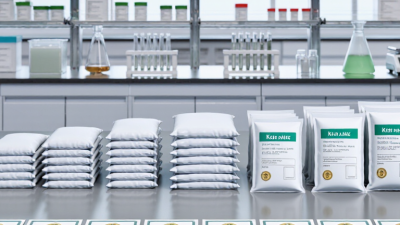
Review each certification document carefully. Confirm the issuing body, validity dates, covered product, and manufacturing site; a certificate may not cover every grade or facility. Request test methods and traceability details if they are available. Packaging deserves attention too: sealed inner liners and readable batch codes help protect product during storage. Supplier comparisons are rarely perfect. Documents can be incomplete, and samples may not represent every shipment, so record questions and follow up before making a purchase decision.
When choosing a Chinese water-soluble potash fertilizer supplier, verify the specification behind every sales claim. Ask for a recent batch certificate showing potassium oxide content, moisture, water-insoluble matter, and relevant contaminants. Request a sample and dissolve it in the water used on your farm. Check for residue. Small differences can matter in drip lines.
Scale is not proof of consistency. FAO’s 2024 Statistical Yearbook reports global fertilizer use of about 186 million tonnes of nutrients in 2022, across nitrogen, phosphate, and potash. That broad figure shows the market’s scale, but it does not predict demand for any single product. Compare suppliers by batch-to-batch test results, production controls, and traceability, not just quoted price. Ask how the supplier handles complaints and keeps retained samples. A polished certificate is not enough.
Also check whether the product suits your crop, water source, and application method. Chloride and sodium levels may matter for sensitive crops or saline irrigation water; confirm limits with an agronomist or laboratory. Review packaging seals, storage guidance, and shipping lead times, then confirm the order’s specifications in writing. One detail is easy to miss: a product that dissolves in a factory test may behave differently in hard farm water. Test before scaling up.