Leave Your Message
Sourcing Potassium Nitrate for fertilizer use requires more than comparing prices online. Buyers must examine purity, solubility, origin, packaging, and supplier reliability. A bright white crystal is not proof of quality. Laboratory documents matter more than appearance.
Dr. Norman Borlaug, a leading agronomist, famously said, “You can’t build peace on empty stomachs.” His words remain relevant. Reliable fertilizer access supports productive agriculture, but careless sourcing can create crop, storage, and compliance problems. Experienced buyers request a current certificate of analysis before placing large orders. They check nitrogen and potassium content, moisture, insoluble matter, particle size, and manufacturing consistency. They also confirm whether the product suits fertigation, foliar application, greenhouse production, or soil use.
Supplier verification deserves practical attention. Look for established manufacturers, documented quality systems, traceable batches, and clear technical support. Ask where the Potassium Nitrate was produced. Ask how it was stored. Ask whether the delivered material matches the tested sample. Delivery conditions can affect caking, damaged bags, and contamination. These details are easy to overlook.
The lowest quotation may not be the lowest total cost. Poor solubility can block equipment and waste labor. Inconsistent analysis can disturb a carefully planned nutrient program. That said, sourcing decisions are rarely perfect. Market prices change, freight becomes uncertain, and product claims require independent checking. A sensible purchasing process compares at least several qualified suppliers. It also follows applicable agricultural, transport, workplace, and environmental requirements. This guide explains how to assess those factors before selecting a dependable Potassium Nitrate source.
How to Source Potassium Nitrate for Fertilizer Use
Fertilizer-grade potassium nitrate should be defined by measurable requirements, not appearance alone. A typical specification lists about 13% nitrogen and 46% potassium oxide. Confirm the basis used for each value. Some suppliers report elemental potassium instead.
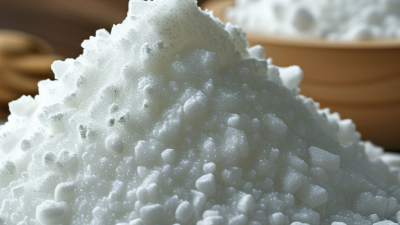
Review assay, moisture, insoluble matter, chloride, sodium, and heavy metals. These limits depend on the crop and application method. Greenhouse fertigation needs excellent solubility and low sediment. Field blending may require controlled particle size and consistent granulation. A clean white crystal is not proof of quality.
Tips: Request a recent certificate of analysis for the exact production lot. Compare it with an independent laboratory test when the purchase is significant. Check the safety data sheet and applicable fertilizer regulations before shipment. Ask how samples were collected, sealed, and stored. Small details matter.
I have seen specifications that looked complete but omitted chloride limits. That gap can affect sensitive crops and irrigation equipment. Packaging should resist moisture, with clear lot numbers and production dates. Keep retain samples for later comparison. One practical point is often missed: test the product in your actual water, because mineral-rich water may reduce performance.
| Requirement Dimension | Recommended Fertilizer-Grade Requirement | Preferred Test or Verification | Sourcing Relevance |
|---|---|---|---|
| Product identity | Potassium nitrate (KNO3), fertilizer grade; water-soluble crystalline or granular material | Supplier certificate of analysis (COA), product specification, and representative sample | Prevents substitution with potassium chloride, blended fertilizers, or non-fertilizer material |
| Guaranteed nutrient analysis | Approximately 13% total nitrogen (N) and 46% water-soluble potash expressed as K2O | Official nutrient analysis using the applicable national or regional fertilizer method | Confirms the expected 13-0-46 fertilizer profile; local labeling rules may define the guaranteed values |
| Chemical purity | Set a buyer specification appropriate to the application; a common procurement target is ≥98.5% KNO3 by mass | Validated chemical assay stated on the COA | Higher purity supports predictable nutrient delivery and reduces unwanted soluble impurities |
| Moisture | Typically ≤0.5% by mass for free-flowing fertilizer material, unless the agreed specification states otherwise | Loss-on-drying or the applicable validated moisture method | Low moisture reduces caking, bridging, and mass variation during storage and handling |
| Water insoluble matter | Typically ≤0.1% by mass for a clean, fully soluble fertilizer grade | Gravimetric insoluble-residue test after dissolution in water | Important for fertigation, hydroponics, and applications using filters or small emitters |
| Chloride content | Specify a low-chloride limit; a practical purchasing target is ≤0.5% Cl by mass where chloride-sensitive crops are involved | Ion chromatography or another validated chloride method | Potassium nitrate is selected partly because it supplies potassium without the chloride associated with potassium chloride |
| Particle size and form | Define the intended form: crystalline, prilled, or granular; for granular handling, a buyer may specify 90% within 1–3 mm | Sieve analysis and visual inspection of a production sample | Controls dust, spreading uniformity, dissolution rate, and compatibility with blending equipment |
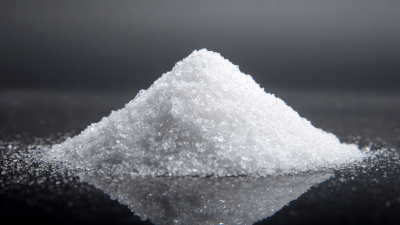
| Appearance and color | White to off-white crystals or granules; free-flowing and without visible foreign matter | Visual inspection against the approved reference sample | Provides a quick incoming-quality check for contamination, degradation, or excessive caking |
| Solution behavior | Rapid dissolution in water with no persistent visible residue; confirm the application-specific concentration and temperature requirements | Bench dissolution test using the intended water quality and operating temperature | Verifies suitability for fertigation, foliar solutions, and concentrated fertilizer stock tanks |
| pH of solution | Record the pH of a defined test solution rather than relying on a generic value; a near-neutral result is normally expected | pH measurement using a calibrated meter and a documented concentration | Helps evaluate compatibility with irrigation water, micronutrients, and other tank-mix components |
| Contaminant control | Set limits for heavy metals and other contaminants according to the destination country, crop, and fertilizer regulations | Accredited laboratory analysis and regulatory compliance documentation | Limits are jurisdiction-specific and should not be replaced by a generic global threshold |
| Packaging and labeling | Moisture-resistant packaging with net weight, lot number, nutrient analysis, handling information, and storage instructions | Packaging inspection, label review, and lot traceability check | Protects product quality and supports recall, inventory control, and regulatory audits |
| Storage and transport | Keep dry, sealed, and away from heat, combustible materials, reducing agents, acids, and incompatible chemicals; follow the current safety data sheet | Review the safety data sheet, transport classification, warehouse conditions, and emergency procedures | Potassium nitrate is an oxidizing substance, so logistics and storage controls are part of supplier qualification |