Leave Your Message

7 Tips for Choosing Water Soluble Fruit Tree Fertilizer?

Choosing a fertilizer for fruit trees is not as simple as picking the highest nutrient number. Water Soluble Fruit Tree Fertilizer can deliver nutrients through irrigation or a watering can, but the right choice depends on the tree, soil, and growing season. A young apple tree in a container has different needs from a mature citrus tree in a warm climate. Small details matter.

Start with the product label. Check the nutrient analysis, recommended dilution, and whether the formula suits your fruit species. Too much fertilizer can scorch roots or encourage leafy growth at the expense of fruit. More is not better. A soil test can help identify what your trees actually lack, rather than guessing from yellow leaves alone. Those leaves may signal several problems, including poor drainage or pests.

These seven tips will help you compare formulations, understand NPK numbers, and match application timing to active growth. They also cover water quality, micronutrients, and safe application practices. Use the manufacturer’s directions, and consult a local horticulture adviser when soil or climate conditions are unusual. One practical lesson is easy to overlook: a fertilizer that dissolves quickly still needs careful measuring. I would not rely on a single season’s results as proof that a product is perfect. Keep simple notes on application dates, growth, and fruit quality. Your trees can offer clues, but they do not tell the whole story.
7 Tips for Choosing Water Soluble Fruit Tree Fertilizer?

How Water-Soluble Fertilizers Support Fruit Tree Growth

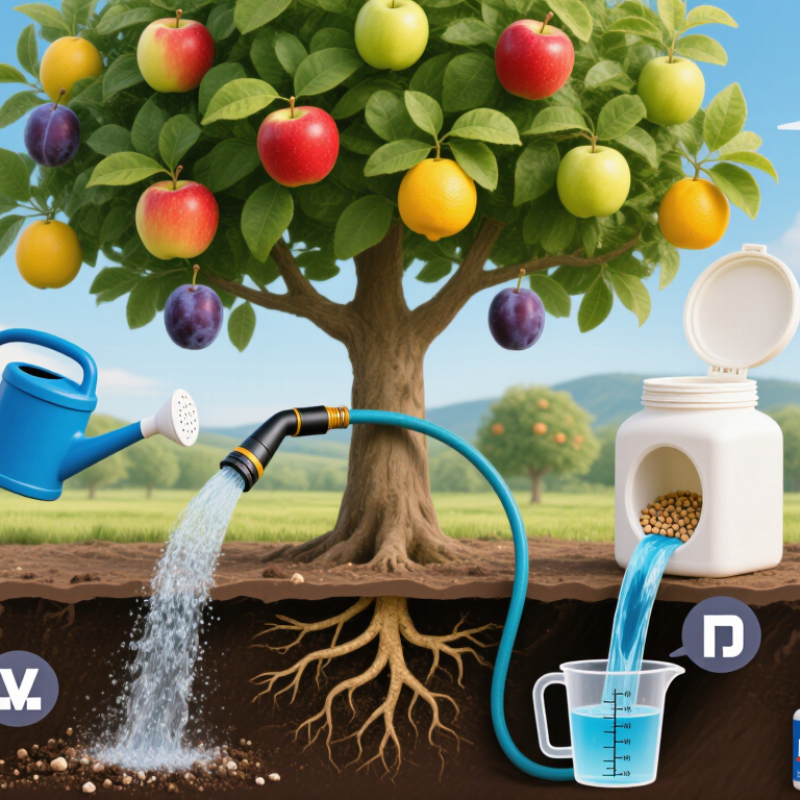
Water-soluble fertilizer dissolves in irrigation water, making nutrients available to fruit tree roots quickly. This can help during active growth, when trees are producing new leaves, flowers, or developing fruit. A measured feed also lets growers adjust nutrient delivery as the season changes. Roots need oxygen.

For example, a young apple tree with pale new leaves may need a closer look at its soil and watering routine. Nitrogen supports leafy growth, while phosphorus and potassium contribute to root development and fruit quality. But leaf color alone does not diagnose a deficiency. A soil test, and sometimes a leaf analysis, can guide a safer choice. More is not better.

Apply the solution evenly over the root zone, not just beside the trunk, and follow the product’s stated dilution rate. Avoid feeding dry, stressed trees; water the soil first if it is very dry. Frequent heavy applications can push excess nutrients beyond the roots or encourage leafy growth at the expense of fruit. Results vary with soil, weather, tree age, and crop load. I would not treat a fertilizer schedule as fixed: observe new growth and fruit set, then adjust cautiously.

7 Tips for Choosing Water Soluble Fruit Tree Fertilizer? - How Water-Soluble Fertilizers Support Fruit Tree Growth

Tip What to Check Practical Guidance How It Supports Fruit Trees
1. Start with a soil test Soil pH and available nutrients, especially nitrogen, phosphorus, and potassium. Use a local laboratory’s results to guide fertilizer choice. Do not assume that every tree needs the same nutrients. Helps avoid correcting the wrong deficiency or adding nutrients already present in sufficient amounts.
2. Match the nutrient ratio to the need The label’s N-P-K analysis: nitrogen (N), phosphate (P2O5), and potash (K2O). Choose a formulation based on soil-test results and local fruit-tree recommendations, rather than selecting the highest numbers. Supplies nutrients in a proportion suited to the tree’s identified requirements; excess nitrogen can encourage leafy growth at the expense of balanced growth and fruiting.
3. Consider the tree’s age and growth stage Whether the tree is newly planted, actively growing, mature, or approaching dormancy. Follow guidance for the specific fruit species and region. Avoid late-season nitrogen applications unless local advice recommends them. Nutrient needs and the risks of stimulating late growth differ with tree age, species, climate, and season.
4. Check for appropriate micronutrients Whether the product contains micronutrients such as iron, zinc, manganese, or boron, and whether a deficiency has been identified. Use micronutrients only when a soil or leaf test, or qualified local guidance, indicates a need. Pay particular attention to boron, which can be harmful in excess. Correcting a confirmed deficiency can support normal plant functions, but unnecessary additions may cause toxicity or nutrient imbalance.
5. Confirm complete water solubility and compatibility Label instructions on dissolution, application equipment, and compatibility with other materials. Dissolve and mix the fertilizer as directed. Do not combine it with another product unless the labels confirm compatibility; test a small mixture when appropriate. Proper dissolution helps reduce undissolved residue and can lower the risk of clogged irrigation equipment.
6. Check water quality and application method Water pH, mineral content, salinity, and whether the fertilizer is intended for soil application or fertigation. Use clean water and follow equipment and product directions. If water has high salinity or mineral content, seek local testing and advice. Water chemistry can affect nutrient availability, plant salt stress, and the performance of irrigation systems.
7. Follow the label rate and prevent runoff The stated concentration, application frequency, crop directions, and safety precautions. Measure accurately, apply to the root zone as directed, and avoid applying before heavy rain or onto dry, stressed roots unless the label advises otherwise. Correct dosing supports steady nutrient supply while reducing the risk of root injury, nutrient loss, and water pollution.

Note: Product rates and timing vary by fruit species, tree age, soil, climate, and local regulations. Follow the product label and region-specific recommendations.

Assessing Tree Needs, Soil Conditions, and Growth Stage

Before choosing a water-soluble fruit tree fertilizer, identify the tree species, age, and current condition. A young apple tree has different needs from a mature peach tree carrying a heavy crop. Check for sparse leaves, weak shoots, or yellowing, but do not assume every symptom means a nutrient shortage. Poor drainage, drought, and root damage can look similar.

Look closely. A soil test gives more reliable guidance than guessing from leaf color. It can reveal pH and nutrient levels, helping you avoid adding phosphorus or other nutrients the soil already contains. Note whether the tree grows in a lawn, raised bed, or compacted ground; these conditions affect root access and watering. I have found that a quick visual check can miss problems below the surface, so keep records of test results and seasonal growth.

Match feeding to the growth stage. Trees generally need nutrients during active growth, while late-season feeding may encourage tender shoots that are vulnerable to cold. Follow the product label’s dilution rate, and apply the solution to moist soil rather than dry roots. It varies. Start conservatively, then watch new growth over several weeks. If leaves scorch or growth becomes unusually soft, pause feeding and reassess watering, soil conditions, and the nutrient rate.

Choosing the Right Nutrient Balance and Micronutrients

A water-soluble fertilizer works best when its nutrient balance matches the tree’s needs, not just the fruit on the label. Check a soil test and the product’s nutrient analysis before choosing a formula. Nitrogen supports leafy growth, while phosphorus and potassium have different roles in root development and overall plant function. More is not automatically better.

For many established fruit trees, a balanced or moderately nitrogen-focused formula may suit active growth, but soil conditions and tree species matter. Too much nitrogen can encourage soft, leafy shoots at the expense of fruiting. Apply the measured solution to moist soil around the root zone, not against the trunk, and follow the label’s dilution rate. Small details matter.

Micronutrients deserve attention when symptoms or a soil test point to a shortage. Iron, zinc, manganese, and boron support specific plant processes, but excess amounts can harm trees. Yellow leaves, for example, may have causes beyond iron deficiency. It is tempting to treat the first visible symptom, yet that can miss the real problem. Compare new and older leaves, check watering and soil pH, and seek local horticultural advice when symptoms persist. Less can be better.

Checking Solubility, Product Quality, and Label Instructions

When choosing a water-soluble fruit tree fertilizer, check how completely it dissolves. Mix a small, label-approved amount in a clear jar of clean water and stir. Look closely. Grit, floating flakes, or a stubborn layer at the bottom may clog a watering can or drip emitter. Some products dissolve more slowly in cold water, so follow the mixing directions before judging them. A clear solution is reassuring, but it does not prove the nutrients are balanced or the product is suitable for your tree.

Inspect the package for a guaranteed nutrient analysis, a readable ingredient list, and clear directions for fruit trees. Check whether it includes micronutrients such as iron or zinc, especially if a soil or leaf test has identified a need. More nutrients do not automatically mean better growth. A sealed, undamaged package with a batch number and usable date is easier to evaluate than a torn bag with missing details. I would not rely on appearance alone; a neat label can still leave important questions unanswered.

Read the label for the amount per volume of water, application method, and recommended timing. Do not guess at a stronger mix: excess fertilizer can damage roots or push leafy growth when the tree needs balanced care. Confirm that the directions fit your tree’s age and growing conditions. If the label is vague, or your soil test suggests a different need, ask a local extension service or qualified horticulture professional before applying it.

Planning Safe Application, Timing, and Fertilizer Storage

Safe application starts with the label and the tree, not a scoop guessed from memory. Check the product’s dilution rate and use a clean measuring spoon. Wear gloves, and mix only what you need. A little goes a long way. Apply the solution around the root zone, not against the trunk, and avoid leaves unless the label specifically permits foliar feeding. Water the soil gently afterward if directions call for it. Keep fertilizer off pavement and away from drains; runoff can carry nutrients where they do not belong. I have found it easy to overestimate a young tree’s needs, so measure rather than improvise.

Timing matters. Feed during active growth when the soil is moist, and avoid fertilizing drought-stressed trees or right before heavy rain. For many fruit trees, late-season nitrogen can encourage tender growth that may not harden before cold weather, but local climate and tree type change the schedule. A soil test can help prevent guesswork. It is worth checking.

Store the dry product sealed in its original, clearly labeled container, in a cool, dry place. Keep it away from children, pets, food, and damp tools. If the powder clumps or the package gets wet, pause and check the label before using it; I would not assume it still measures or dissolves as intended.

Choosing Water-Soluble Fertilizer for Fruit Trees

Compare the nutrient percentages shown on three common fertilizer analyses. Values represent percent by weight of total nitrogen (N), available phosphate (P₂O₅), and soluble potash (K₂O); they are examples, not application recommendations.

Safe-use reminder: Choose a product based on soil-test results and crop needs. Follow the label for dilution, application timing, protective measures, and storage; keep fertilizer sealed, dry, and away from children and pets.