China Top Potassium Nitrate Granule Suppliers
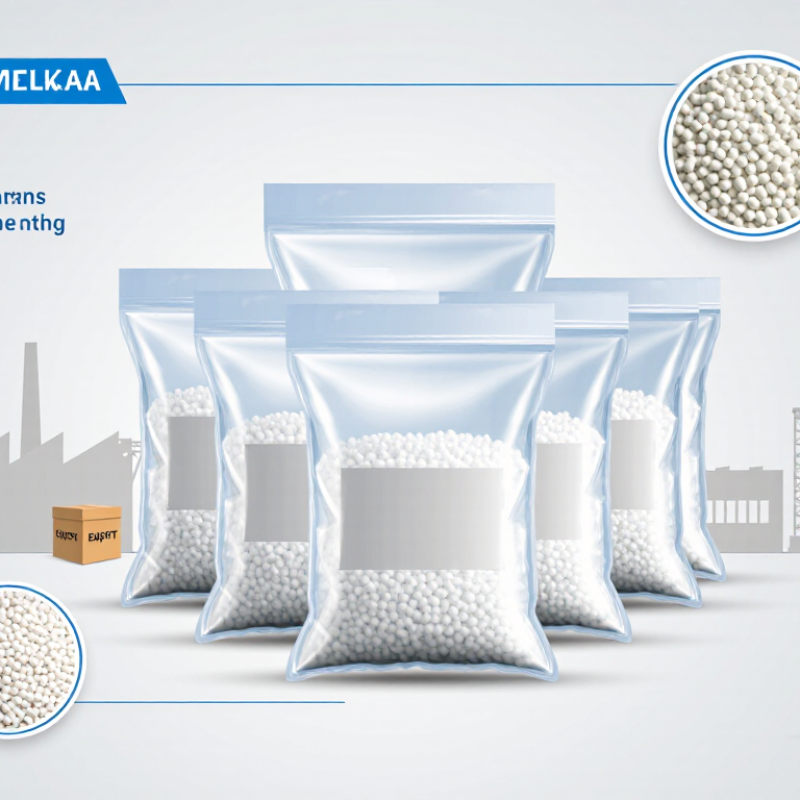
Choosing a reliable China-based Potassium Nitrate Granule supplier takes more than comparing prices. Buyers should review product specifications, batch documentation, packaging, and communication before making a decision. Clear granules, sealed moisture-resistant bags, and consistent labeling are practical details worth checking. Ask suppliers for current technical data and a representative certificate of analysis. Then confirm that the documents match the product being offered.
This guide looks at supplier capabilities, quality checks, export experience, and questions buyers can ask during evaluation. It also considers practical differences in granule size, packaging options, and delivery coordination. Small details matter. A delayed response or unclear specification may signal a process worth examining more closely, though neither alone proves poor quality. Supplier claims should be verified against records and samples where practical.
Expert insight can help readers interpret these checks. However, no source material or verified quotation was provided for a named Potassium Nitrate Granule specialist. To protect accuracy, this introduction does not invent an expert’s name or words. Add a quotation only after confirming its original source and context. That is less polished, perhaps, but more trustworthy.
Understanding Potassium Nitrate Granules and Their Key Properties
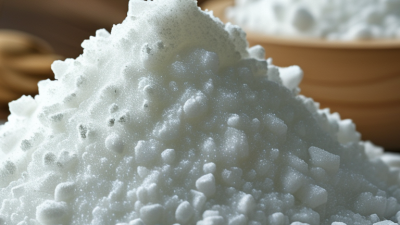
Potassium nitrate granules are crystalline particles that supply potassium and nitrate nitrogen. They are usually white or nearly white, with a clean, dry appearance. Appearance matters. Color alone, however, cannot confirm composition or grade; request a current product specification and test certificate when comparing materials. Solubility in water increases with temperature, which affects how quickly granules dissolve in different conditions.
Granule size and uniformity influence storage, transport, and field spreading. A consistent size range can support more even distribution through suitable equipment. Mixed particle sizes may separate during handling, so a bag’s appearance is only part of the assessment. That detail counts. Potassium nitrate can absorb moisture under humid conditions, leading to dampness or caking. Keep packaging sealed and store it in a cool, dry place.
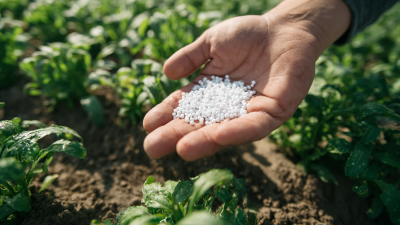
For agricultural use, the balance of potassium and nitrate nitrogen may suit some crop and soil needs, but it is not automatically right for every field. Soil tests and local agronomic guidance help determine suitability and application rates. Buyers should also compare stated nutrient content, granule-size range, moisture limits, and handling instructions. Specifications can differ between suppliers, and a neat-looking sample does not replace documented quality checks. A little caution here is useful.
China Top Potassium Nitrate Granule Suppliers - Understanding Potassium Nitrate Granules and Their Key Properties
Reference guide to common potassium nitrate (KNO₃) characteristics and practical supplier evaluation factors
| Dimension |
Typical Information |
Why It Matters |
| Chemical name and formula |
Potassium nitrate; KNO₃ |
Confirms the product identity and helps distinguish it from other potassium or nitrogen fertilizers. |
| CAS number |
7757-79-1 |
Provides a standardized identifier for technical documents, safety data sheets, and purchasing specifications. |
| Molar mass |
Approximately 101.10 g/mol |
Useful for chemical calculations, solution preparation, and comparing product documentation. |
| Appearance |
Typically white or colorless crystalline granules |
Uniform appearance can support visual quality checks; color alone does not establish purity. |
| Nitrogen content |
About 13.9% by mass theoretically; fertilizer grades are commonly labeled around 13% N |
Provides nitrate-form nitrogen for crops. Check the guaranteed analysis on the product specification. |
| Potassium content |
About 46.6% K₂O equivalent theoretically; commercial fertilizer grades are commonly labeled around 46% K₂O |
Fertilizer labels express potassium as K₂O equivalent, not as elemental potassium. |
| Water solubility |
Approximately 316 g/L of water at 20°C |
High solubility makes it suitable for preparing aqueous nutrient solutions; actual performance depends on water temperature and formulation. |
| Melting point |
Approximately 334°C; decomposition occurs on further heating |
Relevant to processing and safe handling. Avoid exposing the product to excessive heat. |
| Relative density |
Approximately 2.11 g/cm³ for the crystalline material |
Useful as a reference property; bulk density of granules is lower and varies with particle size and packing. |
| Granule size and uniformity |
Particle-size ranges are grade-specific; request the supplier’s sieve analysis and stated size range |
Consistent sizing can improve spreading, blending, and handling. Do not assume one particle-size range applies to every grade. |
| Moisture and caking |
Check the product specification for moisture limits, anti-caking treatment, and storage recommendations |
Moisture control helps maintain free-flowing granules during transport and storage. |
| Supplier documentation |
Request a current certificate of analysis, product specification, and safety data sheet |
Documentation helps verify composition, physical properties, batch traceability, and handling requirements. |
| Storage and handling |
Keep dry and tightly closed; store away from heat, combustible materials, and incompatible substances |
Potassium nitrate is an oxidizing substance and can intensify fire. Follow the product safety data sheet and applicable regulations. |
Values are general reference figures. Product specifications, fertilizer-label guarantees, particle-size ranges, and handling requirements can vary by grade and supplier; confirm details against current documentation for the specific product.
Major Agricultural and Industrial Uses of Potassium Nitrate
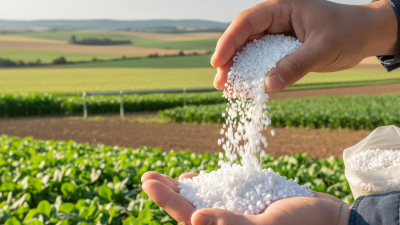
Potassium nitrate is valued in agriculture because it delivers two essential nutrients: nitrate nitrogen and potassium. The nitrogen supports leaf growth, while potassium helps regulate water movement and supports fruit quality. Its high solubility makes it useful in fertigation and carefully managed nutrient solutions. Small details matter. Growers should base application rates on crop needs, soil or water tests, and the product’s analysis, rather than relying on a fixed recipe. Excess fertilizer can waste nutrients and may harm crop performance.
Industrial uses extend beyond farms. Potassium nitrate is used in some glass and ceramic processes, including salt baths for chemically strengthening glass. It can also serve in specialized heat-treatment applications where controlled properties are important. These uses require consistent material quality and suitable process controls. Conditions vary. A grade selected for agricultural use may not meet industrial specifications, so buyers should check purity, particle size, and technical documentation. That distinction is easy to overlook, and supplier claims should be verified against the intended process.
Potassium Nitrate: Solubility and Practical Uses
Approximate solubility of potassium nitrate in water at different temperatures
Solubility rises sharply with temperature. This property supports preparation of concentrated fertilizer solutions and temperature-controlled crystallization in industrial processing. Potassium nitrate is also used in applications including glassmaking and pyrotechnics. Values are approximate grams of potassium nitrate per 100 grams of water.
How Chinese Suppliers Manufacture and Quality-Test Granules
Reliable potassium nitrate granules start with controlled production and careful handling of raw materials. Depending on the process, manufacturers form crystals or granules from a prepared solution, then dry and screen them to achieve a more consistent size range. Temperature, moisture, and feed rates need close monitoring. Small changes can affect flow and storage stability. Details matter.
Quality checks usually include chemical assay, moisture measurement, particle-size distribution, and visual inspection. Some facilities also assess bulk density and granule strength, since excessive fines can cause dust and uneven handling. Samples should represent different points in a production batch, not just the easiest material to reach. That step is easy to rush. It should not be.
Buyers can ask for batch-specific test records and clear acceptance limits. A certificate is useful, but it does not replace consistent sampling or independent verification when required. Results also need context: storage conditions may change moisture levels after testing. No single test catches every weakness. Even a well-run process can produce variation, so suppliers should document deviations and explain corrective actions plainly. Good quality control is ongoing, not a claim on a product sheet.
Overview of China’s Potassium Nitrate Granule Supplier Landscape
China’s potassium nitrate granule supplier landscape includes manufacturers, trading companies, and regional distributors. Their offers can differ in production capacity, granule size, packaging, and export experience. A polished catalogue is not enough. Buyers should compare recent product specifications and ask how batches are checked before shipment.
Granule consistency matters in storage and handling. Request details on particle-size range, moisture limits, water solubility, and packaging weight. Ask for a batch-specific certificate of analysis, then compare it with an independent sample test when the order is significant. Small differences can affect flow through equipment. That detail is easy to overlook.
Supplier selection also depends on communication and logistics. Confirm lead time, loading location, pallet or bag options, and how damaged packaging is handled. A clear quotation should identify the product grade and inspection terms, not just the price per tonne. Samples help, but one sample cannot prove every future batch will match. I would treat that as an open question, especially when switching suppliers. Consistent records, realistic delivery commitments, and prompt answers are stronger signals than broad claims of scale.
How to Evaluate and Source a Reliable Chinese Supplier
When evaluating a Chinese potassium nitrate granule supplier, look beyond a polished catalogue. Request a current specification sheet covering purity, moisture, particle-size range, and appearance. Then compare those figures with your actual process requirements. A useful sample should arrive in sealed packaging with a clear batch number. Keep a portion for independent testing. A PDF alone proves little.
Check whether the supplier can provide a batch-specific certificate of analysis and explain how its results are measured. Ask how production lots are traced, how granule size is controlled, and what happens when a shipment misses specification. Strong answers include records and practical details, not vague promises. Small trial orders can reveal inconsistent sizing or excessive fines before you commit to larger volumes. That matters.
Review packaging, lead times, export documents, and quoted delivery terms together; a low unit price may exclude important costs. Ask for recent production photos or arrange a third-party factory audit when order value justifies it. Notice response quality, too. Clear replies are useful, though they cannot guarantee consistent production. I would also record agreed tolerances in the purchase contract. Even careful checks leave uncertainty, so preserve samples and inspection records for each received batch.