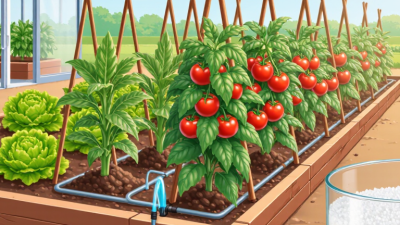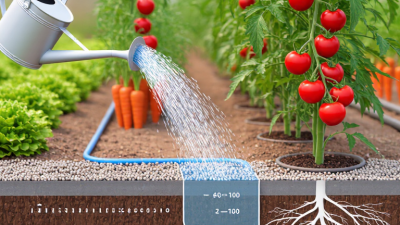
Calcium Nitrate Fertilizer can support crop growth by supplying calcium and nitrate nitrogen, but product quality and suitability vary. A dependable supplier should provide clear nutrient specifications, batch documentation, and practical guidance on storage and application. Solubility matters. So does consistency.
Plant nutrition scientist Patrick Brown’s work provides a useful perspective. Paraphrased for this guide, his research points to a simple principle: “Match nutrient decisions to crop demand and field conditions.” This is an editorial paraphrase, not a verbatim quotation. It reflects why buyers should assess more than price or a polished product page.
This overview of the 10 Best Calcium Nitrate Fertilizer Suppliers Worldwide considers product range, technical support, packaging, export experience, and the availability of quality documentation. Buyers should also compare delivery options and ask how suppliers maintain consistent specifications between batches. A bag’s label cannot answer every question.
Look for concrete details: stated calcium and nitrogen content, recommended handling conditions, and responsive technical staff. Request current documents before making a purchasing decision. Check the evidence. Supplier claims can sound convincing, yet local water, soil, crop stage, and application method all affect suitability. This guide offers a starting point, not a substitute for crop-specific advice. Even a reputable supplier may not be the right fit for every farm. That deserves a second look.
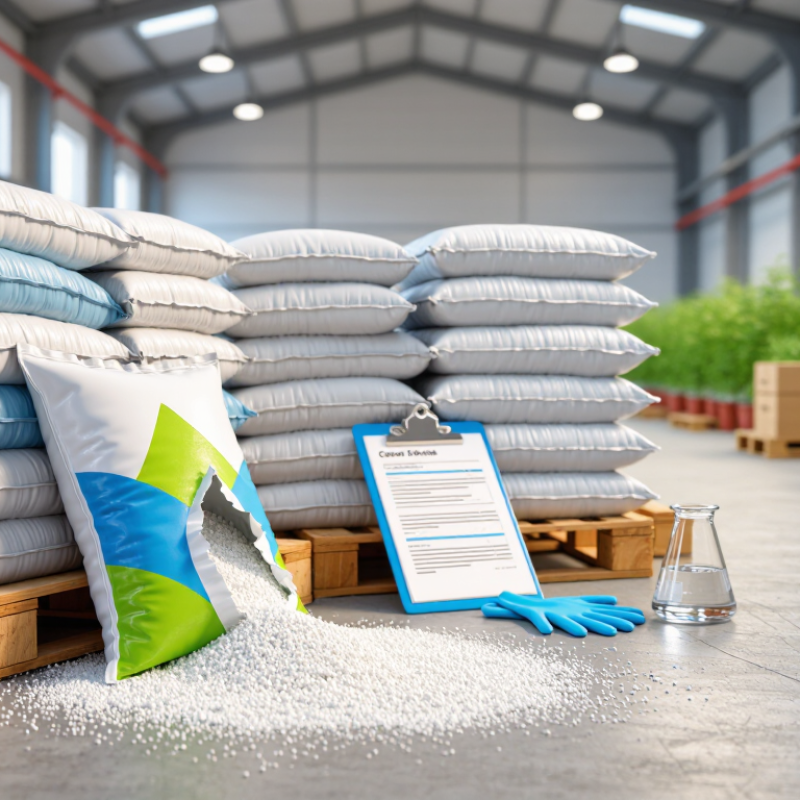
Calcium nitrate is valued for supplying two soluble nutrients: nitrogen and calcium. The formula Ca(NO₃)₂·4H₂O describes calcium nitrate tetrahydrate, whose calculated nitrogen content is about 11.9% by mass. So, a product labeled 15.5% N is not simply pure tetrahydrate. Commercial grades may contain ammonium nitrate in a hydrated calcium nitrate formulation. The label’s guaranteed analysis matters more than the name alone. PubChem’s compound record supports the tetrahydrate’s molecular composition; the International Fertilizer Association’s 2024 outlook estimates global fertilizer nitrogen use at roughly 110 million tonnes for 2023/24, showing the scale of nutrient management behind these products.
Typical soluble fertilizer grades list around 15.5% total nitrogen and 19% calcium, though specifications can vary. Nitrogen may be divided between nitrate and ammonium forms. That split affects how quickly plants access nitrogen and how a grower manages the crop’s nutrient balance. In a fertigation tank, the granules should dissolve fully, and calcium products should be checked for compatibility before mixing with phosphate or sulfate fertilizers. A cloudy tank is a warning, not a minor detail.
Tips: Check the label. Confirm N forms, calcium percentage, solubility, and whether figures are expressed as elemental calcium or calcium oxide. Keep a small batch record; I have seen “same grade” labels hide meaningful differences. That assumption is worth questioning.
Pure calcium nitrate tetrahydrate, Ca(NO₃)₂·4H₂O, contains approximately 11.9% nitrogen and 17.0% calcium by mass. A common commercial fertilizer grade is labeled 15.5% nitrogen and about 19% calcium. Commercial grades may differ from the pure hydrate because of formulation and product specifications; check the product label for its guaranteed analysis.
When comparing calcium nitrate suppliers, check the guaranteed analysis rather than relying on the product name. A common greenhouse-grade benchmark is about 19% calcium and 15.5% total nitrogen. Roughly 14.4% may be nitrate-nitrogen, with the balance in ammonium form. Formulations differ. Confirm whether the calcium figure is elemental calcium or calcium oxide; confusing the two can distort a purchasing comparison.
Water solubility matters in fertigation. Ask for a value tied to a stated temperature, because solubility changes with temperature and test methods. A clear solution in a warm sample does not guarantee the same performance in a cool mixing tank. Watch for persistent crystals, cloudy residue, or blocked filters during a small trial. Small details count.
A reliable specification sheet should identify the nutrient percentages, moisture limits, and test conditions. Request a recent certificate of analysis for the lot, not just a general brochure. Then compare the figures with your crop program and irrigation water. High calcium does not automatically mean better results; excess nitrate can shift nutrient balance. I would also verify how the supplier defines “fully soluble,” since the phrase can sound more precise than it is.
Anonymous global sourcing channels and indicative commercial-grade benchmarks. Entries are not company-specific rankings or verified supplier quotations.
| Supplier Sourcing Channel | Typical Market Region | Common Product Form | Calcium (Ca) | Nitrate-N | Total Nitrogen | Water Solubility | Useful Buyer Checks |
|---|---|---|---|---|---|---|---|
| Integrated fertilizer manufacturers | Europe | Granular or prilled fertilizer grade | About 19% | About 14.4% | About 15.5% | Water-soluble; confirm dissolution specifications for the exact product | Technical data sheet, nitrogen-form breakdown, granule size, and certificate of analysis |
| Nitrogen fertilizer producers | North America | Granular, prilled, or greenhouse-grade product | About 19% | About 14.4% | About 15.5% | Water-soluble; check formulation and water temperature | Solubility guidance, moisture limits, packaging, and regional registration |
| Fertilizer manufacturers and exporters | China | Granular, prilled, or soluble-grade product | About 19% | About 14.4% | About 15.5% | Water-soluble; verify insoluble residue and product-specific data | Independent analysis, export documentation, batch traceability, and shipping terms |
| Domestic fertilizer producers and distributors | India | Granular or water-soluble fertilizer grade | About 19% | About 14.4% | About 15.5% | Water-soluble; obtain a grade-specific solubility statement | Applicable local standards, crop-use directions, and batch certificate |
| Regional fertilizer manufacturers | Southeast Asia | Prilled, granular, or soluble-grade product | About 19% | About 14.4% | About 15.5% | Water-soluble; confirm performance in the intended irrigation system | Anti-caking condition, bag integrity, delivery lead time, and technical support |
| Nitrogen and crop-nutrition producers | Middle East | Bulk or bagged fertilizer grade | About 19% | About 14.4% | About 15.5% | Water-soluble; confirm grade and handling instructions | Export availability, product specification, packaging options, and shipment documentation |
| Fertilizer producers and import distributors | Türkiye and nearby markets | Granular or prilled fertilizer grade | About 19% | About 14.4% | About 15.5% | Water-soluble; verify the declared grade against the analysis certificate | Origin, customs documentation, delivery terms, and local compliance |
| Crop-input importers and wholesale distributors | Latin America | Bagged granular or soluble-grade product | About 19% | About 14.4% | About 15.5% | Water-soluble; confirm storage and dissolution guidance | Import registration, local-language labeling, stock availability, and delivery schedule |
| Agricultural fertilizer importers and distributors | Africa | Bagged granular or prilled fertilizer grade | About 19% | About 14.4% | About 15.5% | Water-soluble; request product-specific solubility and storage data | Regulatory approval, moisture-resistant packaging, traceability, and landed cost |
| International crop-nutrition wholesalers | Multi-region distribution markets | Granular, prilled, or soluble-grade product | About 19% | About 14.4% | About 15.5% | Water-soluble; compare exact formulation and stated test conditions | Manufacturer documentation, batch consistency, minimum order, and freight terms |
Benchmark note: A commonly marketed calcium nitrate fertilizer grade is approximately 15.5% total nitrogen, including about 14.4% nitrate-nitrogen and 1.1% ammoniacal nitrogen, with about 19% calcium. Values and solubility can vary by formulation and market specification; confirm the current product label and certificate of analysis before purchase. Calcium nitrate is an oxidizing fertilizer and should be stored and handled according to its safety documentation.
Comparing global calcium nitrate suppliers takes more than checking a price list. Start with the product specification. Confirm the declared nitrogen and calcium content, physical form, solubility, and packaging size. Ask for a recent certificate of analysis tied to the actual batch, not only a generic product sheet. Small differences can affect storage, dosing, and handling.
Tips: Request samples when practical. Check whether bags arrive sealed and clearly labeled. Ask how the supplier handles delayed shipments or damaged goods.
Review relevant quality and safety certifications, then verify their scope and validity. A certificate is useful, but it does not replace batch testing or clear records. Compare production capacity against your seasonal demand, and ask about lead times during peak periods. For logistics, confirm loading ports, shipping options, moisture protection, and required import documents with your local advisor. A low quote may exclude important costs. I have seen delivery assumptions overlooked; they deserve a second look. Suppliers should answer technical questions consistently and provide traceable documentation. When details remain vague, pause and request clarification before committing.
A region-based review of ten leading calcium nitrate suppliers should compare logistics, product grades, and agronomic support—not headline capacity alone. The International Fertilizer Association’s 2024 Short-Term Fertilizer Outlook estimated global fertilizer demand at about 200.5 million tonnes of nutrients for 2024. This is market context, not a calcium nitrate sales figure. Important distinction. Suppliers in Asia-Pacific often offer granular and water-soluble grades for broad distribution. European portfolios commonly emphasize consistent dissolution and greenhouse fertigation. In the Americas, regional warehousing and smaller pack sizes can matter as much as production scale.
A balanced shortlist can include suppliers serving Asia-Pacific, Europe, North America, Latin America, the Middle East, and Africa, then assess each by grade, packaging, delivery reach, and technical documentation. Some serve high-volume field use; others focus on precise fertigation where residue and solubility checks matter. UN Comtrade trade tables can help assess regional nitrate flows, but product categories may group different nitrate compounds. Exact supplier rankings are therefore difficult to verify from customs data alone. That limitation deserves attention. Buyers should request current product specifications, batch certificates, and storage guidance, then check whether quoted delivery schedules match local seasonal demand. A polished portfolio does not guarantee reliable supply.
For fertigation and hydroponics, calcium nitrate is valued for supplying soluble calcium and nitrate-nitrogen. FAO’s World Fertilizer Trends and Outlook to 2022 projected global demand of 201.8 million tonnes of fertilizer nutrients in 2022, underscoring the scale of nutrient management. That figure is not a calcium-nitrate sales estimate. Buyers should check the guaranteed calcium and nitrogen analysis, solubility, moisture, and batch-specific certificate of analysis. Ask for a clear specification. A low price means little if insoluble particles clog a drip emitter or recirculating system.
Phosphate compatibility needs special care. Concentrated calcium and phosphate solutions can form precipitates, reducing nutrient availability and blocking lines. Keep them in separate stock tanks, dilute them before injection, and flush equipment between feeds. Test the actual source water and fertilizer blend in a small jar first; a clear solution alone does not prove long-term compatibility. UF/IFAS Extension fertigation guidance emphasizes matching fertilizer solubility to irrigation equipment and water conditions. In hydroponics, track electrical conductivity and pH after mixing, not just before. Request contaminant and insoluble-matter limits, plus storage guidance. A detail is easy to miss: hard water can change the result, so repeat the test with the farm’s own water.